
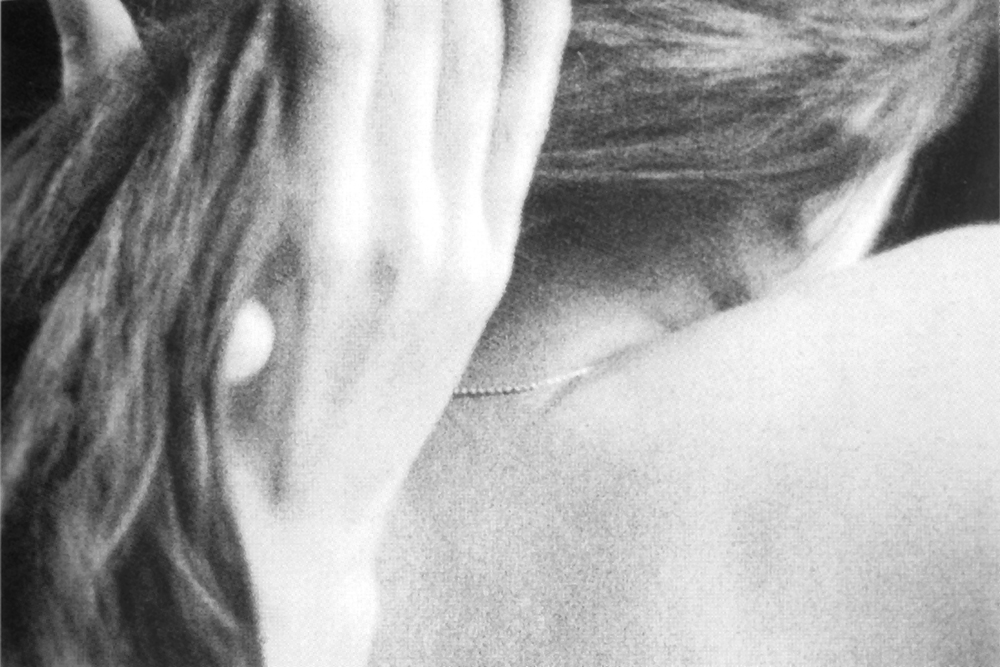
A film about the pain of speaking; where speech falls back on itself, carving a space in which we can touch one another and see. A space in which disparate testimonies collide, and where water is shed. The point just before a new balance is found — the point of devastation before one again remakes oneself.
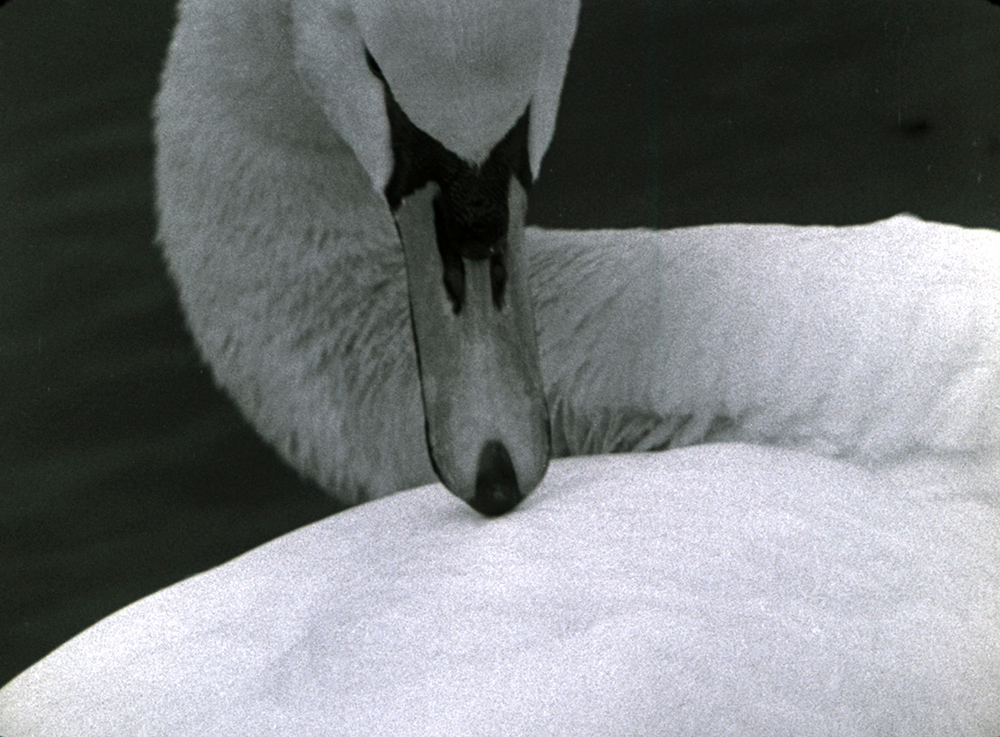
A white swan prepares for flight, flexing and caressing, extending and folding its wings repeatedly as if bracing for a long journey. The close-up images of the swan are de-contextualised via repetition and framing; abstracting the natural form until it becomes a blank screen, which the viewer can project their own meaning onto.
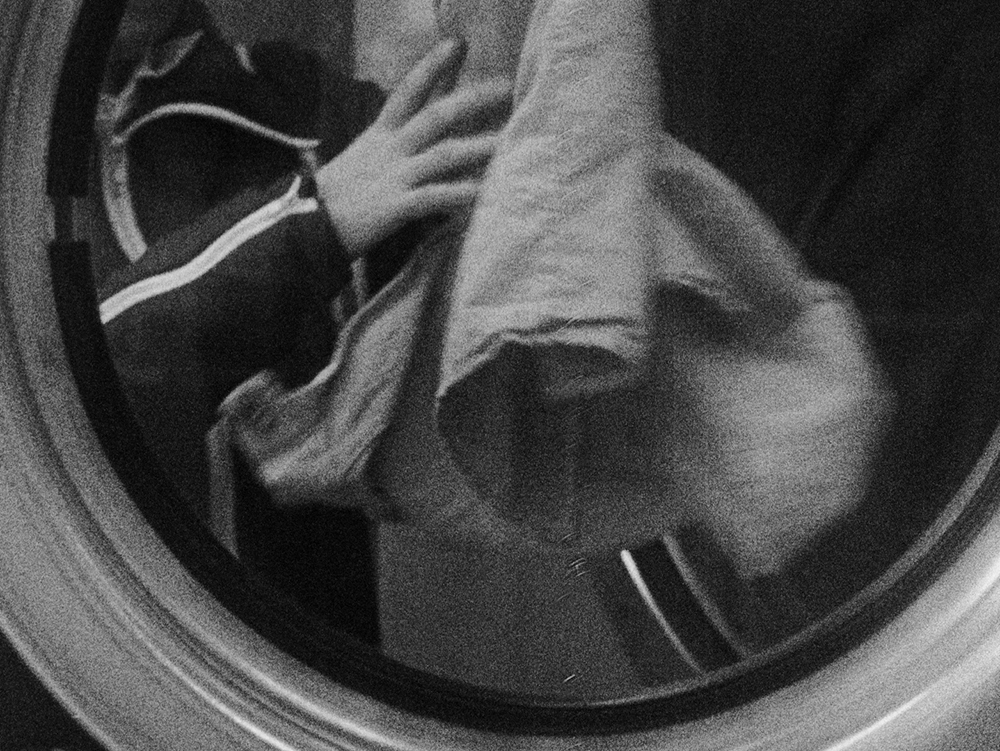
Unfolding depicts the gendered space of the launderette as both a site of oppression and possible resistance. “I was interested in making a film about women’s work spaces; the launderette is a functional space, but it is also a place where women meet socially. I got to know the women, took my Bolex (a wind-up camera), and after a while I felt comfortable enough to start filming. It made me aware of the way in which documentaries can be a form of control. On the one hand, it was a straightforward documentary and, on the other, it questioned my role as maker. It took a long time to make and was extremely rigorous.” (AS)
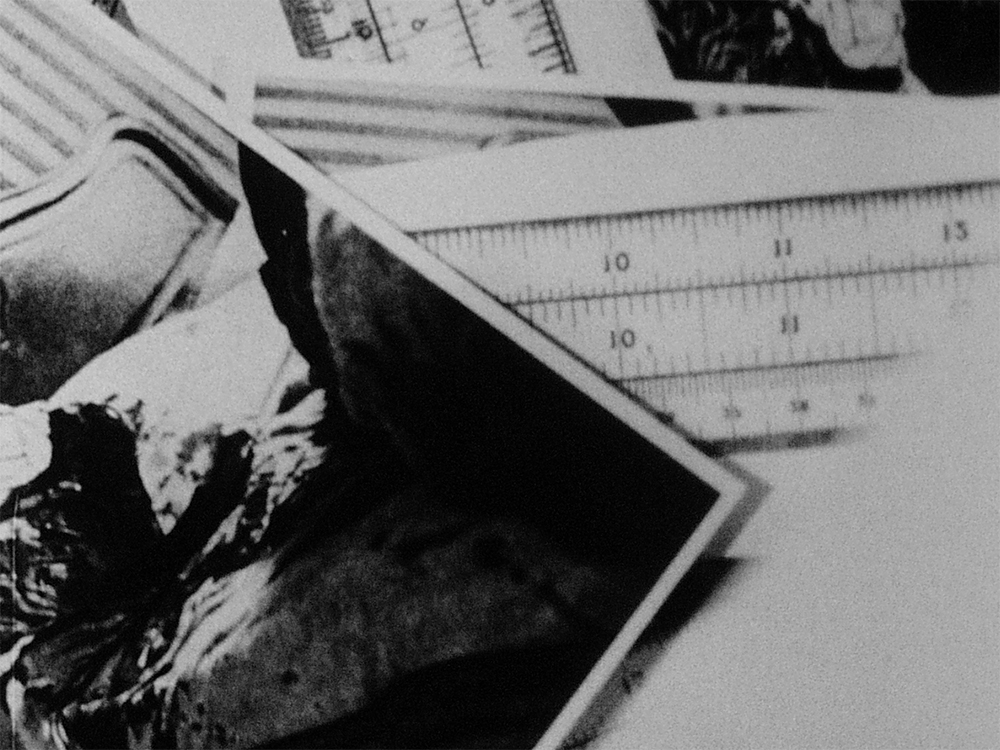
Light Reading begins in darkness. A woman’s voice reads extracts of text by the American Modernist writer Gertrude Stein. When the voice stops, a loose narrative takes shape from a series of collaged photographs, including one of a bloodstained bed. In this film, as in others, Rhodes explores the power relationships present in both ‘the grammar of looking and the grammar of language’.

A woman remembers her past by faces she sees while travelling on the Underground in London. She begins to believe that these people, like her, have all taken part in the same event which took place in the family home in Pakistan. The story takes the form of a letter to her friend Fatima. A personal documentary around journeys, memories and watching, watching while journeying and remembering while watching — travelling through memories, places and events and documenting them into consciousness. The story is spoken in Urdu and although there are English subtitles, they do not always appear in conjunction with what is spoken, producing a layered, ephemeral, and fragmented experience. Alia Syed, born in Swansea to a Welsh mother and an Indian father, expresses the dislocation of the diasporic experience while questioning the role of language in structuring power relations between class, race and gender.


