
A grotesque universe of outrageous characters and sinister places, with references to all kinds of horror classics. The moon holds control over every one, death is lurking in the woods, a doctor is carrying out his experiments, a girl is infected by hungry teeth, ...

An armoured vehicle, a cloud of dust, a bleeding woman, a megaphone, an ambulance, a woman with two children, another ambulance, a weeping girl, a man with white hair, a gust of wind, a reporter, an armoured vehicle, a detail of a bigger picture.

Atomic Park is a place in the White Sands desert (New Mexico), not far away from Trinity Site, where the first atom bomb exploded in july 1945. This national park provides an ambivalent landscape, as well suited for a picknick as for ballistic tests. A white desert, like a natural exhibition hall, in which every presence, every movement can provoke diverse interpretations. Like a faint echo we hear Marilyn Monroe’s desperate monologue and accusation about man's violence from the Misfits.

Beautiful observation 'from my win-dow' of a playful and loving fight between two children, in the rain, on the wet earth, somewhere in Brazil.

Kurt D'Haeseleer, Varinia Canto Vila & Tuk
Pop Steroids is een laptopconcert vermomd als een dance performance die tegelijkertijd een videoclip wil zijn.
+++++
Pop steroids is a laptopconcert disguised as a dance performance that also wants to be a music video.

Kleurrijke muziekvideo die de sfeer ademt van de jaren '60, gemaakt met de technologie van nu.
+++++
Colourful music video breathing the atmosphere of the 1960s, but made with the technology of today.

In deze video gebruikt Ortiz de scratch-techniek om een scene van een Marx-Brosfilm te bewerken. Het origineel mag al een lofzang op de anarchie heten. Wat Ortiz' collage doet met de briljante slapstick-scènes, is pure waanzin. De muren staan letterlijk te beven. Een bizarre anarchistische choreografie. In this video Ortiz uses his scratch-technique on a scene of a Marx Brothers film.
+++++
The original, as we know it, is a love of anarchy. And what Ortiz' collage creates from the brilliant slapstick-scenes is sheer madness. The walls literally vibrate. The zaniest chasms open up, along with the seemingly unending volley of kicks in the opponent's buttocks... a bizarrely comic escapade of anarchistic choreography based on Marxian chaos.

"Back and Forth probeert een beweging te overstijgen. Het lijkt wel een les in perceptie, over de concepten wet en ordehandhaving en hun transcendentie. Het kan worden gezien als een andere - misschien nieuwe - relatie tussen kijker en beeld. Je zit er niet middenin, het draait niet rond jou, het gebeurt naast je. En je ziet het met je 'innerlijke ogen'.” (MS)
+++++
“‘Back and Forth attempts to tran- scend through motion. It is a kind of demonstration or lesson in perception and in concepts of law and order and their transcendence. I think it will be seen to present a different, possibly new, spectator-image relationship. You aren't within it, it isn't you, you're beside it. Back and Forth involves one's neck as well as one's mind-eyes...” (MS)

Aan het draaien van deze film ging een jarenlange fascinatie voor een bepaald raam vooraf. Het materiaal wordt in zijn ruwe vorm getoond.
+++++
Years of fascination with the window preceded the afternoon of actual shooting. The film is shown as it came out of the camera and back from the developer.
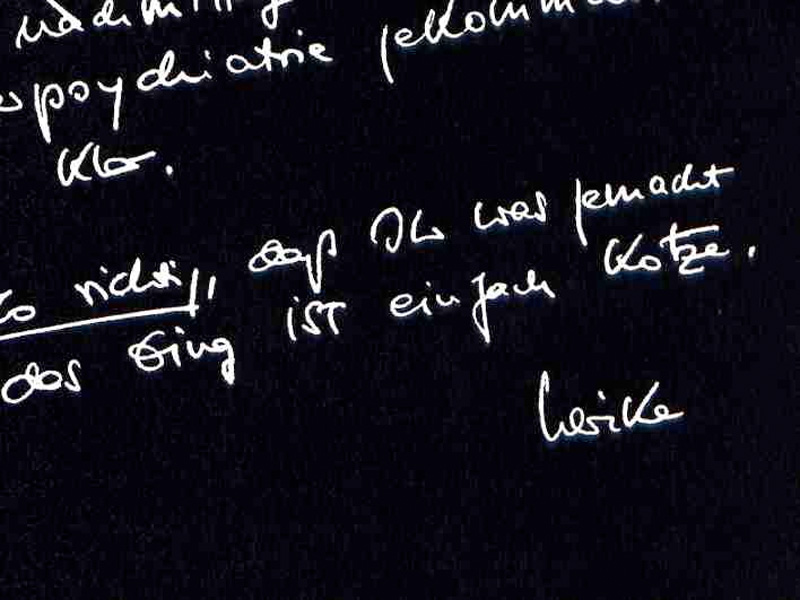
There is hardly any image in Cellule 719: from time to time we see a glimpse of water, but otherwise the film is mainly black. The texts that appear on the screen in grey are from ‘Ein brief Ulrike Meinhofs aus dem Toten Trakt’, a letter written in 1972 by the RAF member Ulrike Meinhof, when she was just imprisoned. For Annik Leroy, this video project is only an intermediate stop in a longer process, a study of the historical RAF and, even more so, into the psychological mechanisms of terror, and the personality structure of a public figure who is left alone in complete isolation with her most private self. (Edwin Carels)
“The feeling that time and space are encapsulated within each other—
The feeling of being in a room of distorting mirrors—
Staggering—
Afterwards, terrifying euphoria that you’re hearing something—besides the acoustic difference between day and night”
— Ulrike Meinhof, 1972-1973

PARTICLES IN SPACE (1957-1979)
Vibrerende stippen en lijntjes die over het scherm dartelen - deeltjes van de energie in de ruimte. Lye maakte verschillende versies van deze film in de jaren 60, en realiseerde in 1979 een compleet nieuwe versie, met de hulp van Steve Jones en Paul Barnes. Op het ritme van drums uit de Bahamas en Nigeria.
+++++
Vibrating dots and dashes which swirled, pulsed, squiggled and darted about the screen - particles of energy in space. Lye made several versions of the film in the 1960s but almost completely remade it in 1979 with the assistance of Steve Jones and Paul Barnes. Synchronised to drum music from the Bahamas and from Nigeria.

Een liefdesverhaal in minimale grafische beelden met klank van Anton Aeki en een tekst geschreven en gefluisterd door Anouk de Clercq (voor f.p.).
+++++
A love story in minimal motion graphics with sound design by Anton Aeki and text written and whispered by Anouk de Clercq (for f.p.).

Een bliksemafleider staat als een dirigent voor het wolkendek. In het felst van een storm van vuur en wind heeft een minuscuul licht het laatste woord, tot het geweld van de hemel plots uitbarst en de bliksemafleider alles off-screen werpt.
+++++
A lightning conductor appears as a musical conductor for the clouds. At the core of an increasingly threatening blaze of fire and a whistling wind, a minuscule light has final call, until the violence of heaven discharges abruptly and the lightning conductor throws it all off-screen.

In a.m./p.m. tast de camera met een oneindig trage, gestage beweging foto's van gebouwen af. De grootstedelijke landschappen worden begeleid door een vrouwenstem. Zij spreekt over zichzelf en de wereld, over beelden van vandaag, over een reis. Haar monoloog is een gefictionaliseerde verwerking van de indrukken die Asselberghs opdeed tijdens een verblijf in Palestina. In de film heeft hij gekozen voor een absoluut minimale audiovisuele aanpak. De afstand die Asselberghs schept door een nuchtere vrouwenstem te gebruiken in plaats van zijn eigen stem zorgt samen met zijn afwijzing van documentair materiaal voor een complexe benadering van zijn gevoelens en ideeën rondom het Israëlisch-Palestijns conflict.
+++++
In a.m./p.m., the camera slowly and systematically scans photos of buildings. We hear a woman's voice accompanying the images of cosmopolitan cityscapes. She recounts her story and that of the world; about the images of today, about her journey. Her monologue is a fictionalised version of the impressions that Asselberghs picked up during his trip to Palestine. He consciously chose for an absolutely minimalist audiovisual approach. The fact that he creates a detached view by using a female voice instead of his own, coupled with deviating from a run-of-the-mill docu- mentary style, produces a complex approach to his ideas and feelings on the Israeli/Palestinian conflict.
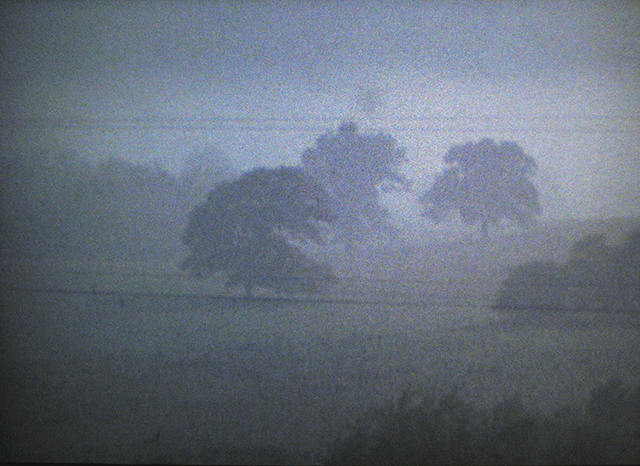
Fog Line is a wonderful piece of conceptual art, a melody in which literally every frame is different from every preceding frame (since the fog is always lifting) and the various elements of the composition – trees, animals, vegetation, sky, and, quite importantly, the emulsion, the grain of the film itself – continue to play off one another as do notes in a musical composition. The quality of the light – the tonality of the image itself – adds immeasurably to the mystery and excitement as the work unfolds, the fog lifting, the film running through the gate, the composition static yet the frame itself fluid, dynamic, magnificently kinetic. (Raymond Foery)

Met het project Nuuk laat Thomas Köner vier tijdsbeelden zien, fragmenten en losse opnames van landschappen en nederzettingen in Groenland, geobserveerd via webcams. Nuuk is in vele opzichten een uitgezuiverd voorbeeld van de ambient-muziek die Köner maakt. Geologische veranderingen, met hun niet aflatende maar tegelijk zeer geduldige modulaties, vormen de essentie van zijn muzikale analogieën.
+++++
Köner's project Nuuk shows in four time portraits, snippets and takes from landscapes and settlements of Greenland (observed via webcams). Nuuk is, in many ways, a crystalline example of Köners ambient music. Geological shifts, with their unceasing yet patient modulations, form the crux of Köner's musical analogies.
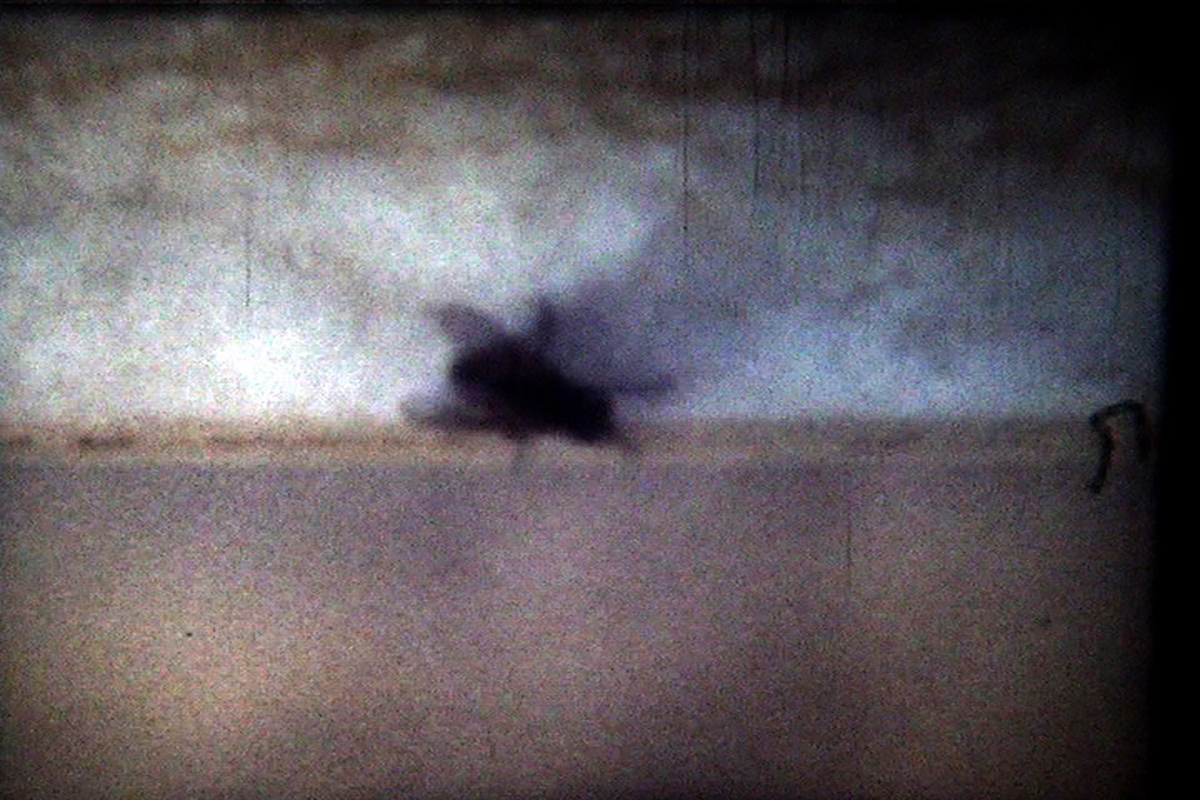
Soap bubbles bursting.
Flies jumping about.
The beating of microphenomenon pulsed by a toy piano.

De camera is geplaatst op een statief voor een raam. Gedurende 21 opeenvolgende dagen wordt het zicht naar buiten vanuit deze positie gefilmd. Dezelfde 3 rollen film worden dagelijks hergebruikt terwijl de camera lens elke keer op een andere plaats afgeschermd wordt. Het beeld verandert constant.
+++++
The camera is mounted on a heavy tripod in front of a window. Over 21 consecutive days the view outside is filmed from this perspective. The same three rolls of film are used one after the other each day while the mask in front of the camera lens is changed every day. The picture is changing constantly.

Deze film bestaat uit een zeventigtal scènes van nauwelijks enkele seconden van beelden van Antartica. Door de extreme methode van het bewerken van beeld, ritme en kleur en licht, krijgt het materiaal de kwaliteit van een landschapschilderij. Voor de geluidsband werden natuurgeluiden en fragmenten van een strijkkwartet even intens bewerkt als de beelden.
+++++
This film basically consists of some seventy scenes of just a few seconds of footage about the Arctic. Thanks to the extreme method of processing texture, time and colour/light, the material acquires the quality of a landscape painting. For the soundtrack, samples of natural sounds and fragments of a string quartet were processed as elaborately as the images.

De tweede video die Opsomer mon- teerde met 'iLife', standaard geleverde software bij Apple computers. De video bestaat uit foto's van steden in Brazilië en Senegal die Opsomer bezocht. De foto's van zichten van en vanuit hoge torengebouwen werden op dergelijke wijze naar video overgezet waardoor de urbane structuren ter plekke lijken gefilmd.
+++++
The second video Opsomer made with the amateur software package 'iLife', supplied with Apple computers. The video consists of photography of cities in Brazil and Senegal, which Opsomer visited. The photos of views from and onto high-rise buildings were later transferred to video in such a way that the urban structures appear to have been filmed right there on the spot.

In deze video spreekt Luis porcar, een bekende spaanse dubbing 'acteur', over zijn werk als uitvoerder van de Spaanse stem voor John Malkovich. De video wordt in het Engels door John Malkovich zelf gedubd vertoond, waardoor de conceptuele loop van het werk wordt gesloten.
+++++
This is a video in which Luis Porcar, a well known Spanish dubbing actor speaks about his work when dubbing the voice of John Malkovich. The video is presented dubbed into English by John Malkovich himself, thus closing the conceptual loop of the work with his collaboration.

Cinéma Metaphysique (Nam June Paik & Jud Yalkut, 1967-1972) herinnert aan Beckett's theater en de minimale bewegingen van de avant-garde dans uit de jaren '60 en is een studie in gebaren, noise en stilte.
Reminiscent of Beckett's theater, as well as the minimal movements of 1960s avant-garde dance, Cinéma Metaphysique (Nam June Paik & Jud Yalkut, 1967-1972) is a study in gesture and stillness, noise and silence.

Deze klassieke video van Rist bestrijdt rockmuziek met zijn eigen middelen. De repetitieve strategie en representatie van de vrouw binnen de popmuziek wordt hier tot in het absurde doorgetrokken. Rists manipulatie van snelheid en video effecten veranderen haar stem in een parodie op vrouwelijke hysterie en haar lichaam in een groteske dansende pop.
+++++
Rist's classic video takes on rock music with its own tools, pushing pop's repetitive strategies and representations of women to absurd lengths. Rist's manipulation of speed and video effects renders her voice into a parody of female hysteria and her body into a grotesquely dancing doll.

By drawing directly on the celluloid, Joritz comments sarcastically on the speech of an American TV presenter. In a time span of a few minutes he becomes the object of a continuous transformation that is draped on him like a second, celluloid skin. Joritz’s drawings not only serve to adjust the image but also as a way to unmask the representation of authority.

Living is een demonstratie van het virtuoze camerawerk van Zwartjes. Hij speelt in de film de hoofdrol maar bedient tegelijkertijd de camera die hij vanuit zijn hand op zichzelf richt. Zwartjes' techniek van het uit de hand filmen (zonder door de zoeker te kijken en in dit geval zonder erdoor te kunnen kijken) in snelle, maar vloeiende bewegingen, bereikte hier zijn perfectie.
Living is a demonstration of the virtuoso camera-work of Zwartjes. He plays the lead in the film, but at the same time operates the (hand-held) camera which he points at himself. Zwartjes' technique of hand-held filming (without looking through the viewfinder which he couldn't anyway in this case) in rapid yet flowing movements reaches its perfection here.

Le retapeur des cervelles is een korte, burleske farce waarin de mentale chaos eerst uitvoerig wordt gecultiveerd alvorens er een kort en geruststellend eind aan te maken.
+++++
Le retapeur des cervelles is a short, burlesque film where at first the mental chaos is cultivated before ending in a reassuring way.

Een raam dat wordt gesloten door een lichtgevoelig mechanisme - 'camera' - en een foto- synthetische lens - de 'zonneschermen.' De lichtkunstenaar Luis Recoder zet met deze eenvoudige middelen zijn zoektocht voort naar film als een medium dat licht verspreidt, verstrooit, herverdeelt en laat verdwijnen.
+++++
Light artist Luis Recoder continues his exploration of film as an apparatus which dis- perses, scatters, redistributes and re-resolves light.

Deze constructie van een taal bestaande uit elektronische beelden en geluiden is een voorloper van Hill's latere, complexere onderzoeken.
+++++
In its construction of a language of electronic images and sound, this is a precursor to Hill's later, more complex investigations.


Woody & Steina Vasulka openen in hun werk de ruimte 'achter de lens', i.p.v. de ruimte 'voor de lens' die het conventionele beeld weergeeft. Hun video's zijn meer dan een technische tour-de-force: ze creëren de mogelijkheid om de functie van het beeld in een nieuw perspectief te observeren.
+++++
Whereas the conventional image is always presented as a space 'in front of the lens', the Vasulkas also opened up the space 'behind the lens.' Their work is more than a technical tour-de-force: they create the possibility of observing the image's functioning within a new perspective.

Eric Siegel, een technische pionier binnen de videokunst, had reeds op zijn veertiende een eigen TV toestel gebouwd. Later ontwierp en bouwde hij de Siegel Colorizer in 1968 en een synthesizer in 1970.
+++++
A technical pioneer in video, Eric Siegel had built his own TV set by the age of fourteen. He went on to design and build the Siegel Colorizer in 1968, and a synthesizer in 1970.

Spiral 5 PTL is de vijfde en 'waarschijnlijk de laatste' (PTL = probably the last) van een reeks real time performances. De spiraal is een steeds terugkerende vorm in het werk van Sandin, een zeer invloedrijke figuur in de technische ontwikkeling van het medium video.
+++++
Spiral 5 PTL is the fifth in a series of real time performances in which video synthesis was produced live. 'PTL' refers to 'probably the last' of the series. The spiral image is one that recurs throughout Sandin's work, a seminal figure in the technological development of the video medium.

Een ongemonteerde zwart-wit- film, een ware elektronische 'tijdsculptuur'. John Whitneys werk heeft een grote invloed gehad op de manier waarop tegenwoordig wordt gedacht over het gebruik van computers voor het creëren en visualiseren van electronisch gegenereerd beeld.
+++++
An uncut black & white film, a real electronic 'time sculpture'. John Whitney's work has had a major influence on the way we think now about the use of computers for creating and visualising electronically generated images.

Woody & Steina Vasulka openen in hun werk de ruimte 'achter de lens', i.p.v. de ruimte 'voor de lens' die het conventionele beeld weergeeft. Hun video's zijn meer dan een technische tour-de-force: ze creëren de mogelijkheid om de functie van het beeld in een nieuw perspectief te observeren.
+++++
Whereas the conventional image is always presented as a space 'in front of the lens', the Vasulkas also opened up the space 'behind the lens.' Their work is more than a technical tour-de-force: they create the possibility of observing the image's functioning within a new perspective.

In Micro Cosmos, een serie van vijf korte met de computer geanimeerde werken, wordt het beeld van een sferische vorm getransformeerd in een pulserende, energetische evocatie van organismen.
+++++
In Micro Cosmos, a series of five short computer-animated works, the image of an orb is transformed into a pulsating, energetic evocaton of life forces.

Een suggestieve beschrijving van hoe een blind persoon twee stadsdelen van Helsinki ervaart. Gebaseerd op interviews met blinden en Pennanens eigen ervaringen. De visuele impact van de installatie vindt haar gelijke in Mika Vainio's soundtrack.
+++++
A suggestive depiction of two parts of urban Helsinki as experienced by a blind woman, based on interviews with visually impaired people as well as on Pennanen's own experiences from living in the neighbourhood. The installation's visual impact is matched by Mika Vainio's soundtrack.

Filter City focust op twee vrouwen, hun onderlinge verhouding en relatie met een stad in ontwikkeling - architecturaal, politiek en sociaal. Ze 'vertellen' de plaatsen die ze bewonen en hun verlangen naar vriendschap, intimiteit en zin.
+++++
Filter City focuses on two women, their relation to one another and to a city that is in transformation - architectonically, politically and socially. The characters narrate the spaces they inhabit and use, their desires for friendship, intimacy and meaning.

Gedraaid in de periferie van Tokyo, vertelt deze documentaire over een nogal banaal fenomeen. Wat een excentrieke modegril zou kunnen zijn, is in feite een duidelijke verwerping van de sociale normen in Japan.
+++++
Filmed in Tokyo's suburbs, this documentary narrates a banal phenomenon. What could be perceived as an excentric caprice, is in fact a clear rejection of social norms in Japan.

Netzhammers digitale animaties vormen een vreemd universum vol van symbolische elementen en handelingen die reflecteren over de mens. Communicatie, kwetsbaarheid en onzekerheid spelen er een hoofdrol.
+++++
Netzhammer's digital animations depict a strange universe filled with symbolic elements en acts which reflect about 'man'. Communication, vulnerability and insecurity are key-elements.


