
“I had read all about the films before I ever saw any of them. By the time I did see them they had taken up permanent residence in my imagination. And when I saw them, I understood anew what it means to witness moving images: the images move - and the images are deeply moving. Hindle, Brakhage, Solomon, Fleming and Frampton: three different generations of American avant garde filmmakers, five very different approaches to that thing we call Cinema, but all films by filmmakers with a profound faith in the capacity of images to move us: aesthetically, emotionally, intellectually. The works of these five artists have intensely affected my own conception of the moving image and my own practice as a filmmaker. Frampton and Hindle were gone before I knew who they were but I was lucky enough to spend six years in conversation and correspondence with Brakhage. I went to graduate school to study with Fleming and learn from her just as she had learned from Hindle. Solomon I met by great good chance while in school and after several years of long-distance study and mentoring he has become a dearest friend and Colorado neighbor. This program of five films is a way for me - now fifteen years into my own filmmaking practice - to look back at the artists and works that shaped my vision during crucial and formative years - and continue to inspire me and expand my idea of what is possible in the art of the moving image”.
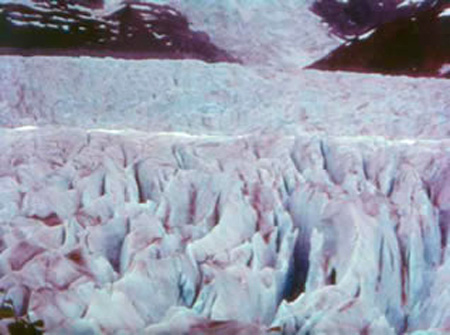
“... almost like the Earth itself - the green ice-covered rocks, the slicing feeling, the compressive feeling of the glaciers. The whole time I was watching I kept thinking that you were a master of the North, the arctic landscape - the dark red flowers in the dusky light, the deep blue light, the tall trees with the running mists, and Jane looking ... the ice, the water, the moss, the golden light. A visual symphony ....” (Hollis Melton)
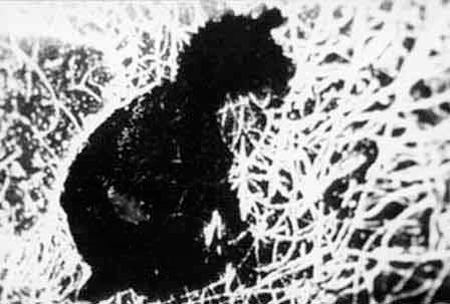
“A meditation on memory, burial and decay ... a belated kaddish for my father”. “It is the 19th century ‘tissue of lies’ about childhood which Solomon rips open: his visual beauty, a biological beauty, is an encouragement to embrace this transformative mulch, this aesthetic compost, and to give up all commas ‘,’, of hesitation - to accept suffering even (as does most of the animal kingdom most stoically) and revel in the ‘fire of waters’ (as poet Robert Kelley put it) that we all are ....” (Stan Brakhage)

This is Shellie Fleming’s tribute to Will Hindle, created roughly two years after his sudden death from a heart attack. Shot on a minimal budget using outdated film stock, Left Handed Memories combines outtakes from Hindle’s work with new footage by Fleming, including scenes in Baltimore following her return from his funeral. Passages from his films appear as memories at the bottom of the frame. The audio mixes radio clips from the day of Hindle’s death with music from his record collection.
“This film would be the first artwork where I would insist that I always remember how small I was in the global reality.” (Shellie Fleming)
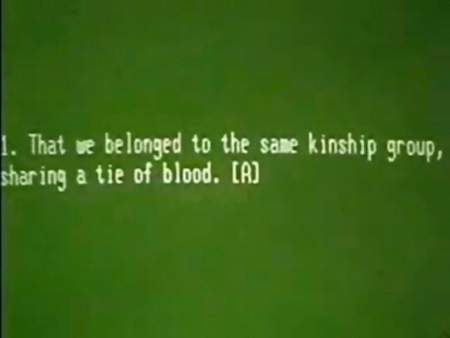
“In Gloria! Frampton juxtaposes nineteenth-century concerns with contemporary forms through the interfacing of a work of early cinema with a videographic display of textual material. These two formal components (the film and the texts) in turn relate to a nineteenth-century figure, Frampton’s maternal grandmother, and to a twentieth- century one, her grandson (filmmaker Frampton himself). In attempting to recapture their relationship, Gloria! becomes a somewhat comic, often touching meditation on death, on memory and on the power of image, music and text to resurrect the past.” (Bruce Jenkins)


