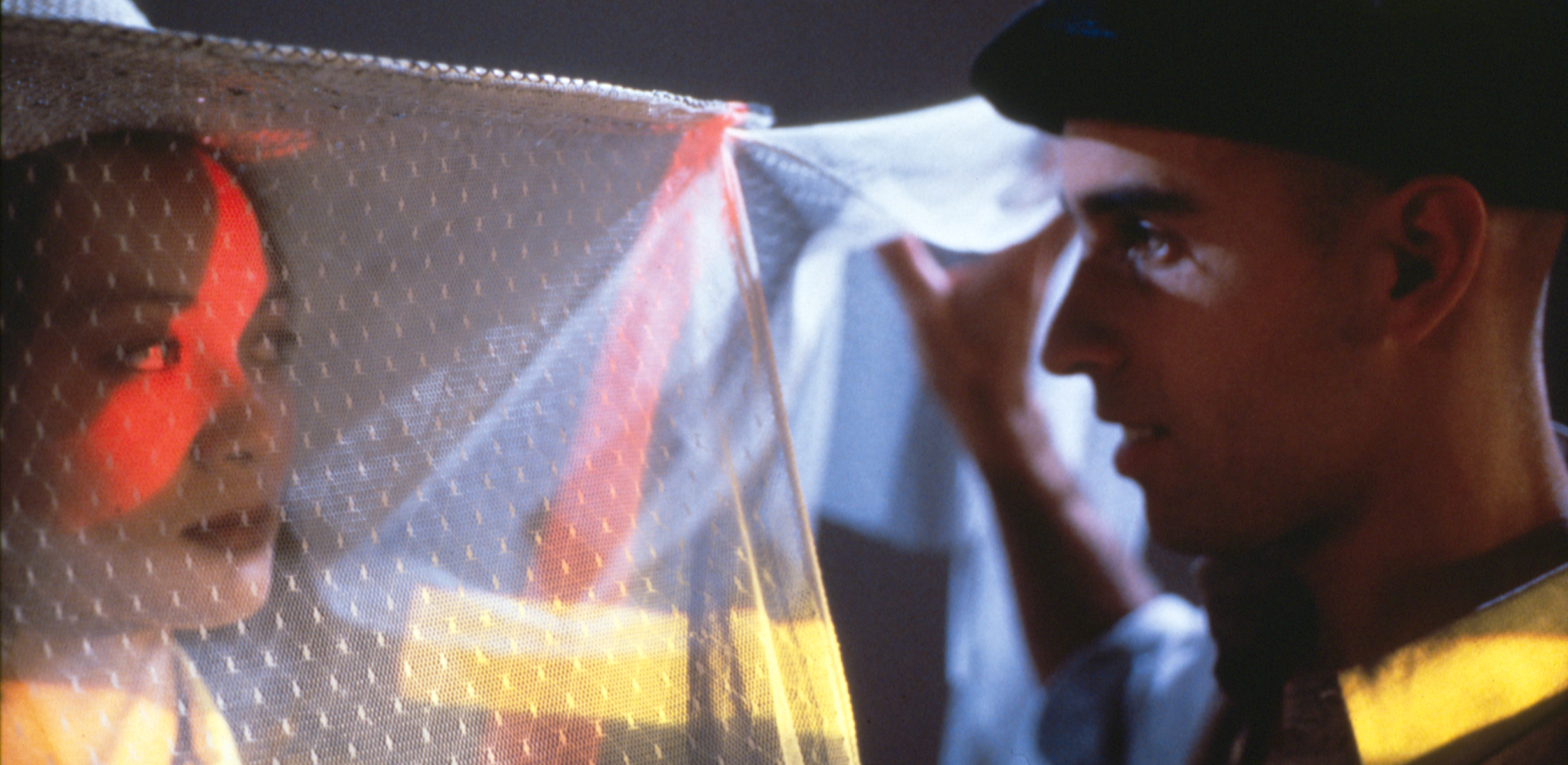
Monday 03.04 - 19:00
What About China?
2022, 125 mins
Followed by a conversation (English spoken) between Trinh T. Minh-ha and art historian Véronique Danneels.In collaboration with Elles Tournent.
Wednesday 05.04 - 21:00
Reassemblage (1983, 40 mins) + The Desert is Watching (2003, 12 mins) + Bodies of the Desert (2005, 20 mins)
Friday 07.04 - 19:00
Naked Spaces - Living is Round
1985, 135 mins
Sunday 09.04 - 21:15
Surname Viet Given Name Nam
1989, 108 mins
Tuesday 11.04 - 19:00
Shoot for the Contents
1991, 101 mins
Thursday 13.04 - 21:30
A Tale of Love
1995, 108 mins
Saturday 15.04 - 19:15
The Fourth Dimension
2001, 87 mins
Friday 21.04 - 21:15
Night Passage
2004, 96 mins
Monday 24.04 - 19:00
Forgetting Vietnam
2016, 90 mins
www.cinematek.be
In colloboration with CINEMATEK and Elles tournent
CINEMATEK is honoured to welcome Trinh T. Minh-ha to present a retrospective of her work.
“Ik ben niet van plan om te praten over ; gewoon spreken in de nabijheid van.”
Met deze woorden, uitgesproken in haar debuutfilm Reassemblage, beschrijft Trinh T. Minh-ha de positie die ze in haar hele oeuvre aanneemt. Een positie die gekenmerkt wordt door een aversie voor institutionele autoriteit en deskundigheid en daarentegen gegrond is in belichaamde ervaring en continue zelfbevraging. Het ervaringsgerichte in haar werk heeft echter weinig te maken met het persoonlijke of subjectieve: het “ik” bestaat er eerder als een open ruimte om anderen uit te nodigen het te bewonen. Die drang om begrenzingen en verwachtingspatronen te doorbreken en de interpretatieve claims van autoritaire vormen uit te dagen spreekt ook uit haar schrijven: haar invloedrijk boek Woman, Native, Other (1989) is in de eerste plaats een bevraging van de tegenstrijdige imperatieven waarmee een “ik”, als “vrouw uit de derde wereld”, geconfronteerd wordt bij het creëren en bij het bekritiseren van de rol van maker, intellectueel en antropoloog.
Sinds het begin van de jaren 1980 problematiseert Trinh T. Minh-ha, geboren in Hanoi in 1952 en tijdens de Vietnamoorlog geëmigreerd naar de VS, de vormen van reductionisme en essentialisme die ons zelf- en wereldbeeld beïnvloeden. Haar films zijn gegrond in de vraag: waarom niet een land, een volk, een cultuur benaderen door uit te gaan van wat bij een beeld hoort, of bij een naam zoals ‘Senegal’, maar ook ‘Vietnam’, ‘China’, of ‘Japan’ ? Wat staat precies voor en spreekt tot een culturele of politieke gebeurtenis? Hoe kan men via het medium van cinema tonen, vertellen en ontvangen eerder dan louter representeren? Met andere woorden, Trinh beschouwt een gegeven naam of een opgenomen beeld niet als finaliteit maar als vertrekpunt. Zo zoekt ze in haar nieuwste film What about China? niet naar het “ware” gezicht van China, maar beweegt ze zich onder het beeld van wat als vanzelfsprekend wordt beschouwd in onze dagelijkse verhouding tot het land, bepaald door de media en andere vormen van beeldvorming.
In contrast tot het eindeloze discours over een virtuele grenzeloosheid in een geglobaliseerde wereld, ontsluiert en doorprikt Trinh T. Minh-ha de afscheidingen en afbakeningen die onze plaats in en verhouding tot de wereld bepalen. “Reality is delicate,” zegt ze in Reassemblage, en het is dat constante, weifelende aftasten van de werkelijkheid, wars van aanspraken op authenticiteit, autoriteit of neutraliteit, die uit haar werk de kracht laat spreken om uit onze verkokerde wereld te breken.
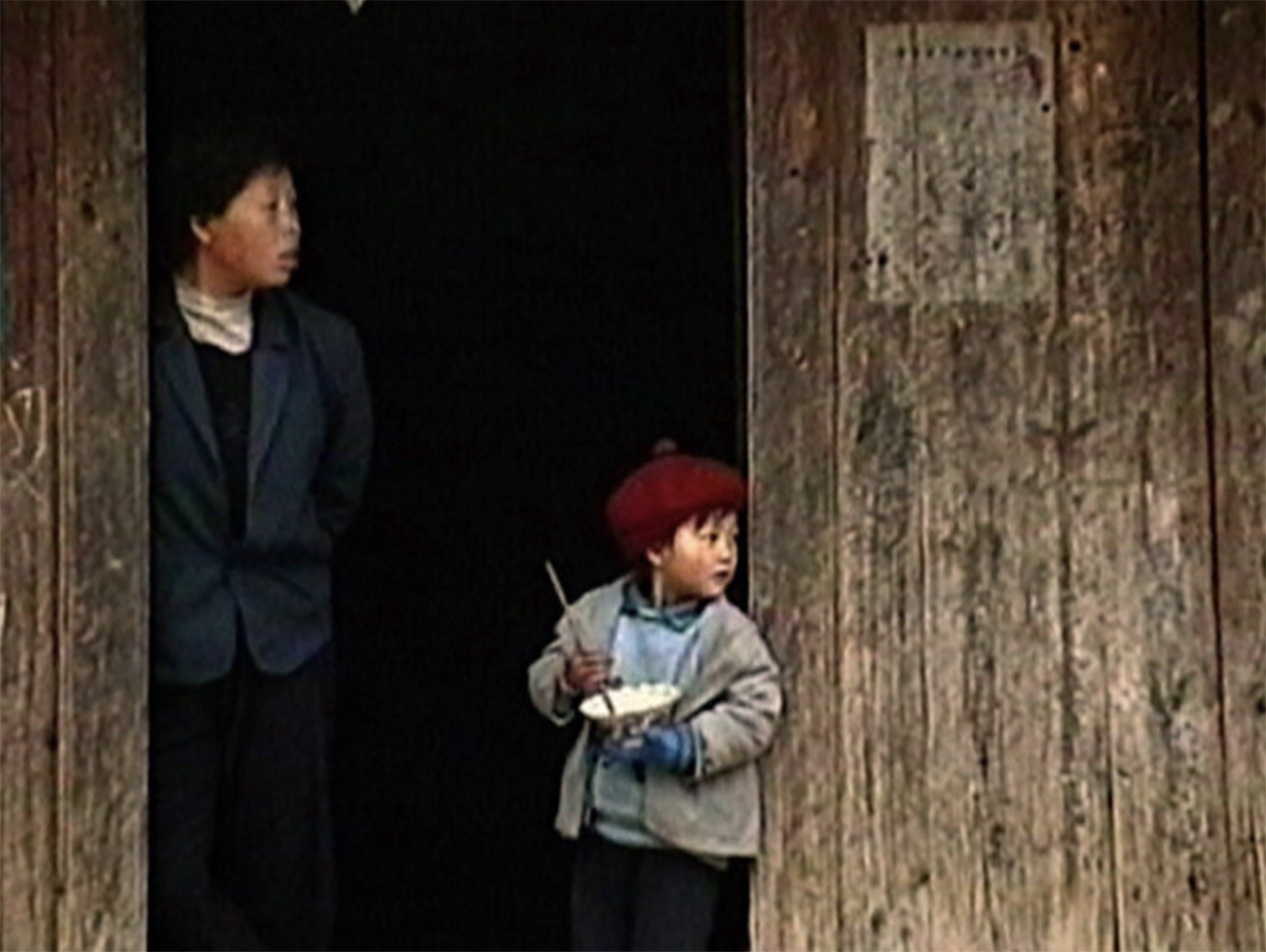
In her newest film, the sonically striking What About China?, Hi8 footage shot in rural China from 1993-1994 is reframed thirty years later: first against China’s contradicting representation, histories, and futures, and second through the process of conversion from video to digital, where the transformation of low-res images creates ghostly animations on a canvas of multi-generational change. Pulsing against the surface of this inquiry is a theory of harmonics that takes the Hakka Roundhouse – a circular multi-family dwelling connected by common areas in the center – as its nexus. Trinh finds in this architecture, in the materials she uses to compose her film, and in the footage converted from video to digital a network of passageways: between society and nature, self and other, landscape and innerscape. The viewer is invited to steep themselves in these harmonics, both material and metaphor, to find associative flights from the polyrhythmic interaction of ideas, instruments, songs, text, moving and still images. We journey through these haunted, infinite scales, guided by voiceover readings by Xiaolu Guo, Xiao Yue Shang, Yi Zhong, and Trinh herself. Each offers a different entryway into the film’s polyvocal network of thought. One asks: “What exactly is disappearing? And why?” (Kim-Anh Schreiber)
“The notion of “speaking nearby” put forth in Reassemblage has been realized differently with each film of mine. It’s a challenge for me every time I put it into practice. How do you speak nearby? It is in What About China? where this practice of speaking in proximity, rather than merely speaking for and about, is most comprehensive. Being closely related to China – China is an ancestral culture of Vietnam, where I was born – does not qualify me to speak about Her. Of greater fascination is how the film is positioned in relation to China, or how the Self is extended through a relationship with the Other.”
English spoken
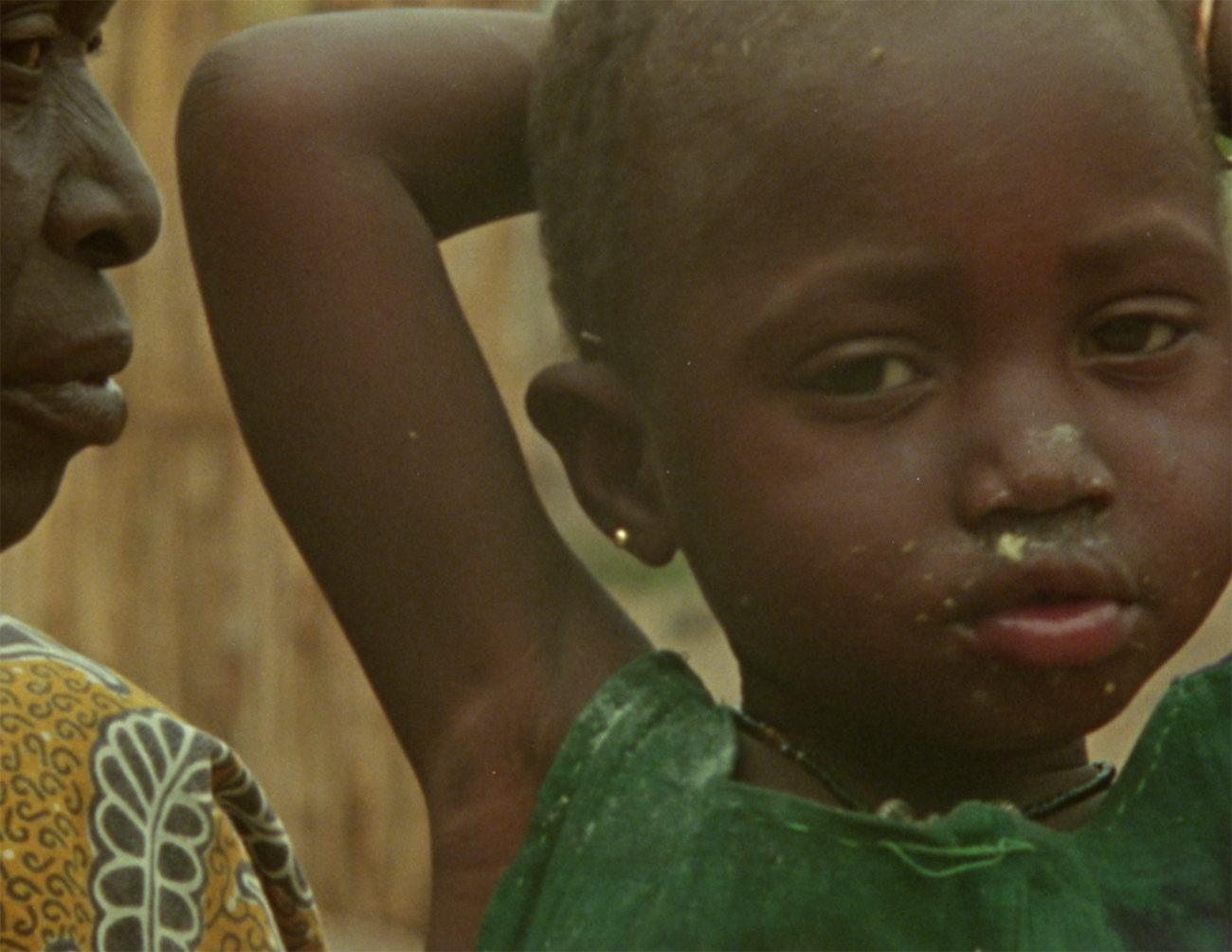
Reassemblage is Trinh T. Minh-ha’s first 16mm film, made after a three-year stay (1977-80) in Senegal, where she taught music at the Institut National des Arts in Dakar. It was during this stay that she had become aware of the hegemony of anthropological discourse in any attempt, by both local outsiders and insiders, to identify and capture the observed culture. This film is a response to the urgency she felt to question the anthropological apparatus, its essentialising constructs and colonial ethos. This also implied a questioning of her own position as a "hybrid insider", as someone who shares a certain experience of colonialism but at the same time is no less considered an outsider than any European. Above all, the film is a response to a desire to "not simply mean"; a desire not to approach Senegalese culture by wrapping it in reductive constructions of meaning. Trinh subverts the conventions of cinematic representation by playing with repetition, non-synchronous sound and unstable camerawork that disrupt temporal and spatial continuity and invite viewers/listeners to assume their own relationship to the world that appears on screen.
“My approach is one which avoids any sureness of signification. In most anthropological presentations, the establishing of connections between signs and the deciphering of cultural codes is flattened out by the voice of knowledge, the voice of factual truth. This is reflected, in films, in the omniscience of the cinematography and the editing as well as the commentary and/ or the “talkinghead” strategy. The strategies of Reassemblage question the anthropological knowledge of the “other,” the way anthropologists look at and present foreign cultures through media, here film... The critical work in Reassemblage [...] is not simply aimed at the anthropologist, but also at the missionary, the Peace Corps volunteer, the tourist, and last but not least at myself as onlooker.”
English spoken


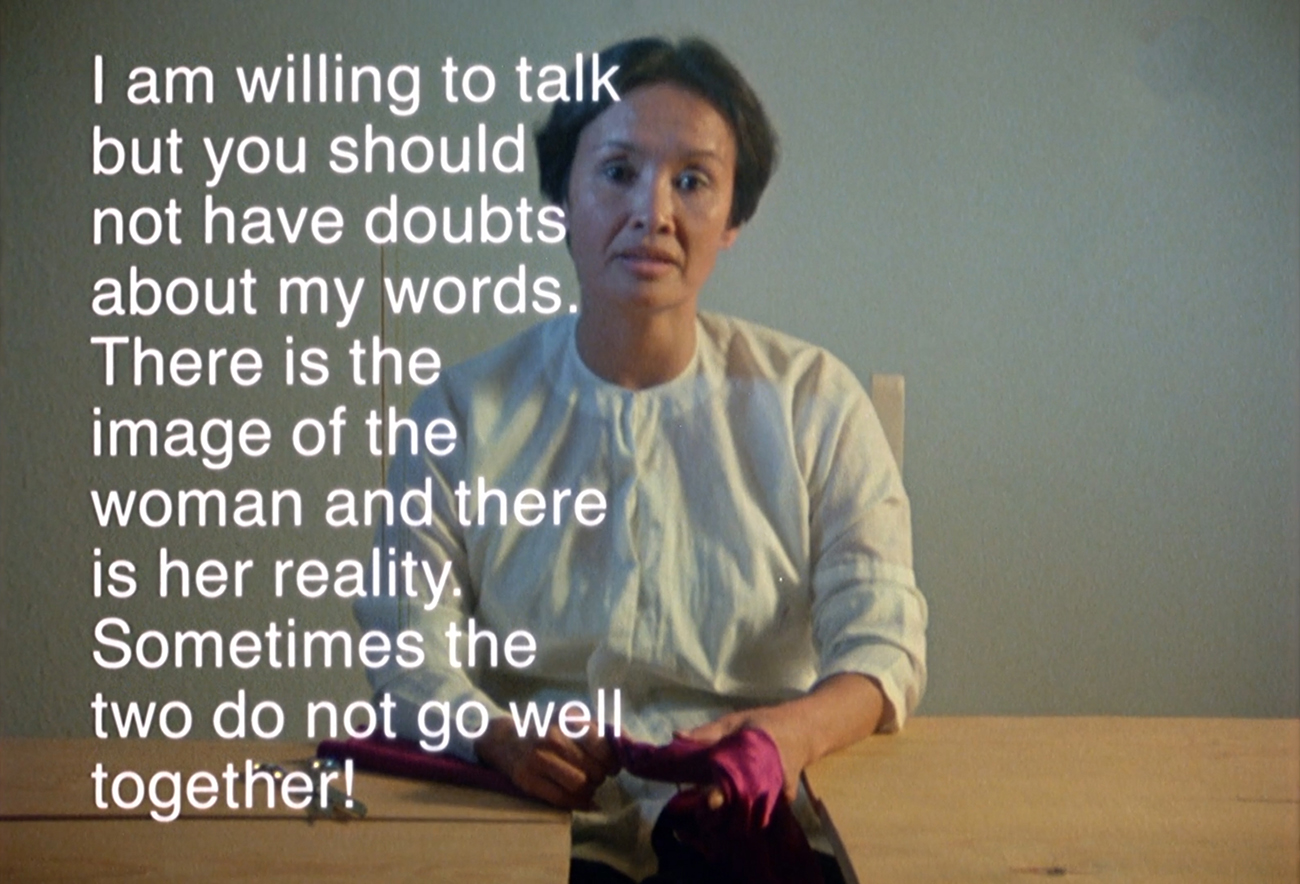
“A Vietnamese woman making a film on Vietnamese women: What could sound more familiar and correct in today’s context of cultural diversity and liberal pluralism?” And yet, says Trinh T. Minh-ha, self-representation and representation is a responsibility one cannot afford to merely reject. In order to break away from that kind of authorized subjectivity, she chose for a number of itineraries that would allow her to show “the culture” without endorsing the insider’s authority. This was largely done by avoiding the so-called factual historical information that one easily gets in history books on Vietnam, and by working with the more slippery realms of oral tradition and popular memory: the songs, sayings, proverbs that expose women’s condition; the stories that people remember of the historical heroines of Vietnam; and the life stories of contemporary Vietnamese women. In parallel, Trinh T. Minh-ha also emphasises the politics of the interview by drawing on a series of interviews that had been conducted in Vietnam by another woman of the Vietnamese diaspora (Mai Thu Van), translated and published in French, re-translated into English by herself, and then re-enacted in the film. In this way, both the role of translation in film and the role of film as a form of translation are problematised.
“It’s not a return in a physical sense, but a return in the sense that I made my two previous films in Africa before making Surname Viet – a film in which I have finally been able to come to terms with Vietnam or with a national identity; a film focusing on Vietnamese women or on female identity and difference. That’s why it was extremely important for me not to approach it from a legitimized “insider’s” point of view, but rather from a number of spaces locating me somewhere between an insider and an outsider. Spaces manifested, for example, in the acknowledgment of the mediator’s role; in the multiplicity of translation, of the “you” referred to by the interviewees, and of firstperson narratives; and in the exposing of the politics of interviews involved.”
English spoken
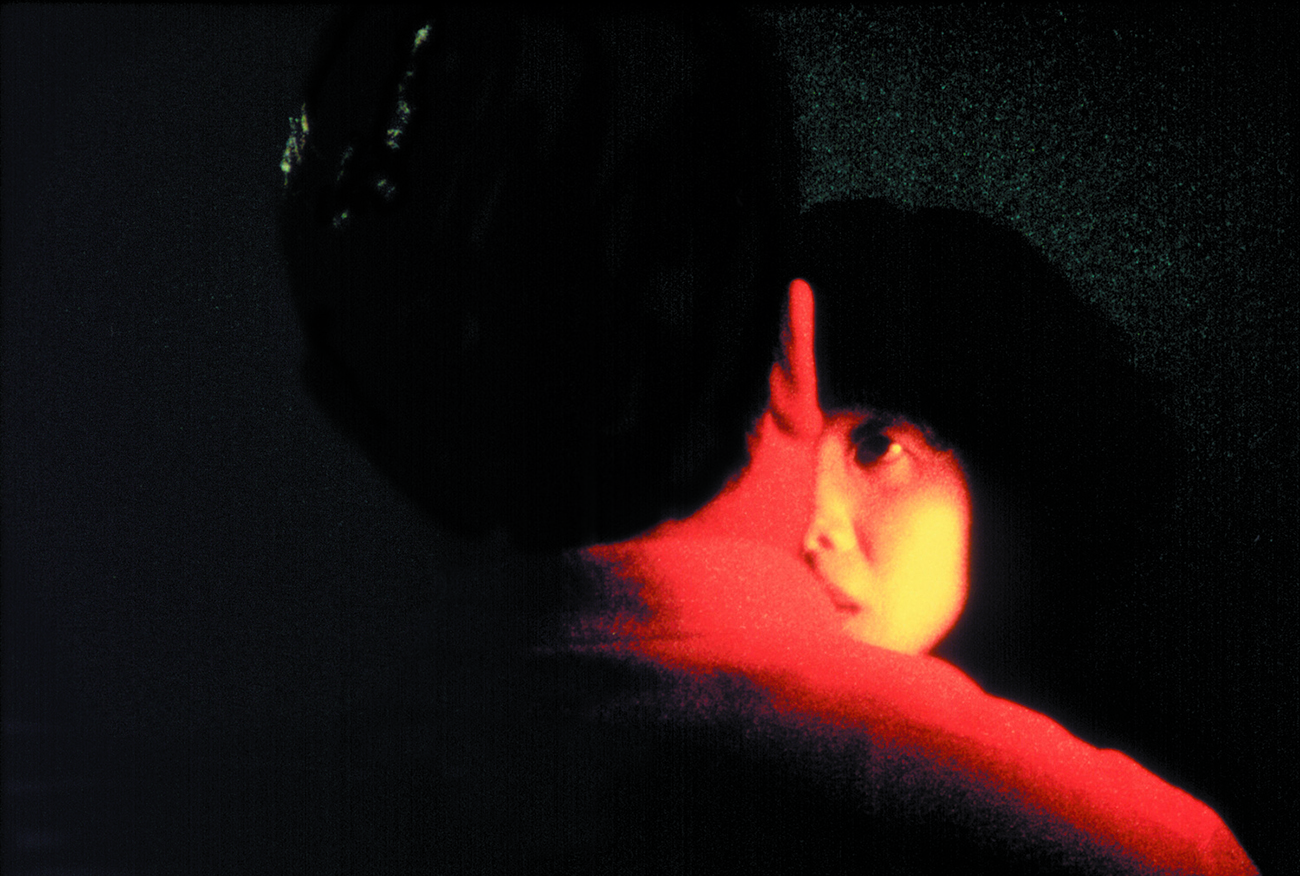
This film by Trinh T. Minh-ha, whose title partly refers to a Chinese guessing game, reflects on Mao’s famous statement: “Let a hundred flowers blossom and a hundred schools of thought contend.” It offers simultaneously an excursion into the maze of allegorical designations and narratives in China and a reflection on questions of power and change, politics and culture, as reflected by the events in Tiananmen Square in 1989. Contrary to conventional expectations of “authenticity”, Trinh T. Minh-ha offers to the viewer a wide range of what one can call “border people”, who are right at the edge of being an outsider and an insider to the culture. Testimonies of artists, philosophers and cultural workers are interwoven with female voices, Chinese popular songs and classical music, and sayings of Mao and Confucius. Video images emulate the gestures of calligraphy and contrast with film footage of rural China and stylized interviews. Like traditional Chinese opera, Trinh’s film unfolds through “bold omissions and minute depictions” to render “the real in the illusory and the illusory in the real.” Exploring color, rhythm and the changing relationship between ear and eye, this meditative documentary realizes on screen the shifts of interpretation in contemporary Chinese culture and politics.
“Every work I realized, has been realized to transform my own consciousness. If I went to Africa to dive into a culture that was mostly unknown to me then, I went to China mainly because I was curious as to how I could depart from what I knew of Her. The prejudices that the Vietnamese carry vis-a-vis the Chinese are certainly historical and political. The past domination of Vietnam by China and the antagonistic relationship nurtured between the two nations have been weighing so heavily on the Vietnamese psyche that very often Vietnamese identity would be defined in counteraction to everything thought to be Chinese. And yet it suffices to look a bit harder at the Vietnamese culture – at its music, to mention a most explicit example – to realize how much it has inherited from both China and India.”
English spoken