
I have deliberately selected a very diverse selection of films made over the past 50 years for these two programs. Some could loosely be described as documentary, others as fiction, but one thing connects all of them — they are all constructed from documentary images of the world around us. Each program begins with a film by another artist that I found highly influential when I first started making my own work. They each revealed, in their own way, that film can completely transform our reading of documentary images to create its own reality, and that images are infinitely mutable.
This first program focuses on films where the word shapes our perception of the images. When I saw Ian Breakwell’s film Repertory as a young student, I was stunned by the way in which its use of a voice-over completely transformed a tracking shot around an ordinary building. The image depicted the exterior of a disused theatre, but Breakwell’s voice enabled my imagination to enter the space and vividly observe the surreal scenarios that he describes. Repertory made it clear to me that you don’t have to record dramatic events to create drama, and that the most ordinary everyday images can be made extraordinary through the use of a voice-over. Perhaps most importantly, I learnt that it is possible to explore all kinds of ideas by working independently with limited resources. If you are patient and look hard enough, all meaning can be found or created close to home. All of the films in this first program explore my love-hate relationship with the power of the word and are shaped largely by the use of voice-over or captions, creating expectations that are frequently subverted. (John Smith)
In the presence of John Smith
Curated by John Smith
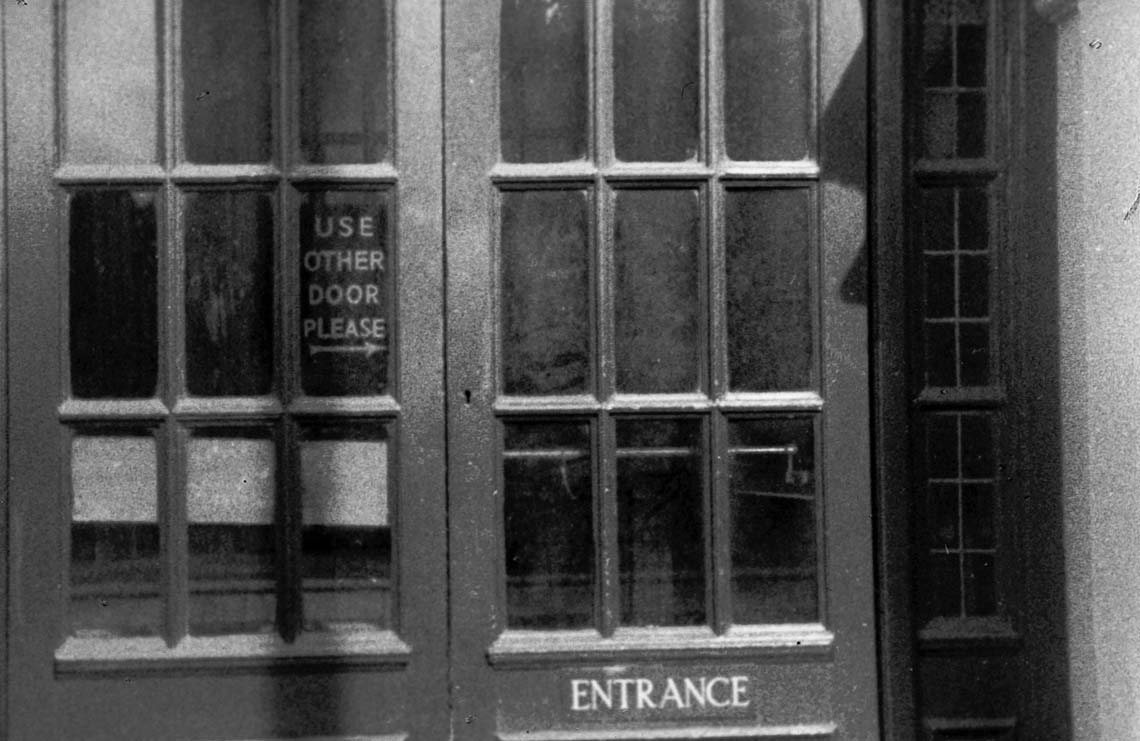
The visuals in Repertory consist of one continuous tracking shot, during which the camera completely circles the exterior of a locked and empty theatre, recording its walls, doors and blank hoardings and catching fleeting glimpses of passersby. On the soundtrack a voice describes a three-week cycle of imagined presentations inside the theatre. The instant polarity between concrete, defined image and fictional narrative is exaggerated by the nature of the descriptions, which are wittily absurd and fantastic. (Tony Rayns)
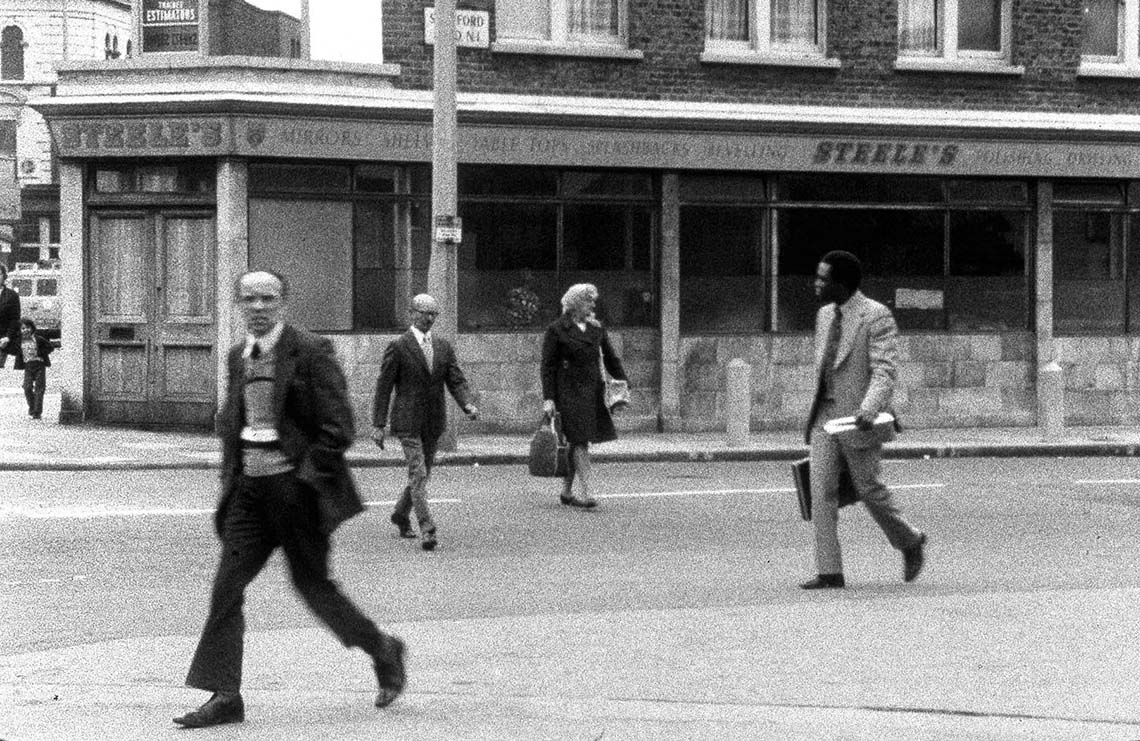
In 1976, while still a student at the Royal College of Art, John Smith filmed an ordinary street corner in East London: passersby, traffic, birds crossing the sky, people queueing for the cinema. Only later did he add an authoritative voice-over that seems to orchestrate every movement on screen — his own voice of god retroactively claiming command over everything we see. Inspired by Truffaut’s Day for Night, this avant-garde masterpiece exposes how cinema manufactures meaning through narration. A brilliant reflection on filmmaking, authorship and control, chance and intention, and the moment when description slips into instruction. (Nana Bahlmann)

In The Black Tower we enter the world of a man haunted by a tower which, he believes, is following him around London. While the character of the central protagonist is indicated only by a narrative voice-over which takes us from unease to breakdown to mysterious death, the images, meticulously controlled and articulated, deliver a series of colour-coded puzzles, jokes and puns which pull the viewer into a mind-teasing engagement. Smith’s assurance and skill as a filmmaker undercuts the notion of the avant-garde as dry, unprofessional, and dull and in The Black Tower we have an example of a film which plays with the emotions as well as the language of film. (Nik Houghton)

Dad’s Stick features three well-used objects that were shown to me by my father shortly before he died. Two of these were so steeped in history that their original forms and functions were almost completely obscured. The third object seemed to be instantly recognisable, but it turned out to be something else entirely. Focusing on these ambiguous artifacts and events relating to their history, Dad’s Stick creates a dialogue between abstraction and literal meaning. Looking back over half a century, the work explores the contradictions of memory to create an oblique portrait of ‘a perfectionist with a steady hand’.

On December 1st 1990, watched by the world’s media, Dover construction worker Graham Fagg climbed through a hole in a chalk wall 40 metres below the English Channel, shook the hand of Calais construction worker Philippe Cozette and shouted, “Vive la France!“ On June 23rd 2016 Britain voted to leave the European Union. Inspired by a message for motorists on Eurotunnel trains, Song for Europe is an underwater celebration of Britain’s connection to the mainland.

An autobiographical reflection on his unassuming name leads the filmmaker down a wayward path through family photographs, personal archives, and internet searches. Alternately wry and wistful, peppered with Smith’s characteristically droll commentary, Being John Smith flits between self-deprecation and ’cris de coeur’ , offering quietly hilarious observations on Smith’s lower middle class origins and career as an avant-garde cinema luminary, as well as unexpectedly melancholic impressions on age and extinction. (NYFF)

After the world premiere of Being John Smith at the Toronto Film Festival a strange experience in the filmmaker’s hotel causes him to ponder the nature of reality.


