
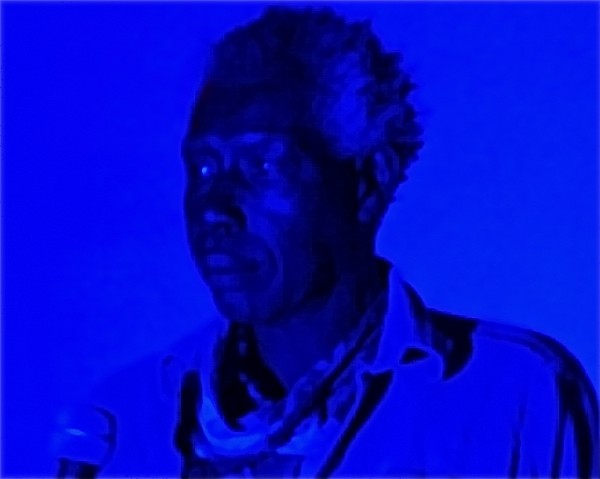
“Mille soleils is a project that came from far away, born of an introspective quest, from questions about the importance of cinema in my life and that of my family, about the origins of my desire to make films, and also from my relationship with Africa. The project was born in 2008, shortly after the end of the shoot for Claire Denis’ 35 rhums, in which I act. It was an experience that profoundly affected me. It was also the year that marked the tenth anniversary of the death of my uncle, Djibril Diop Mambéty. It was a period in which I was led to think about and measure this loss, which resulted in long conversations with my father about the life and death of Djibril, on his films, especially Touki Bouki. This is when I discovered the thousand stories hiding behind Touki Bouki – our family’s history, but also the history of the film’s stars Magaye Niang and Myriam Niang. (...) My characters rarely find themselves where they want to be in the world: there is always somewhere to escape from, to return to, or to conquer by means of the imagination.” (Mati Diop)
- - - Touki Bouki is screened on Saturday 5 April 12:30
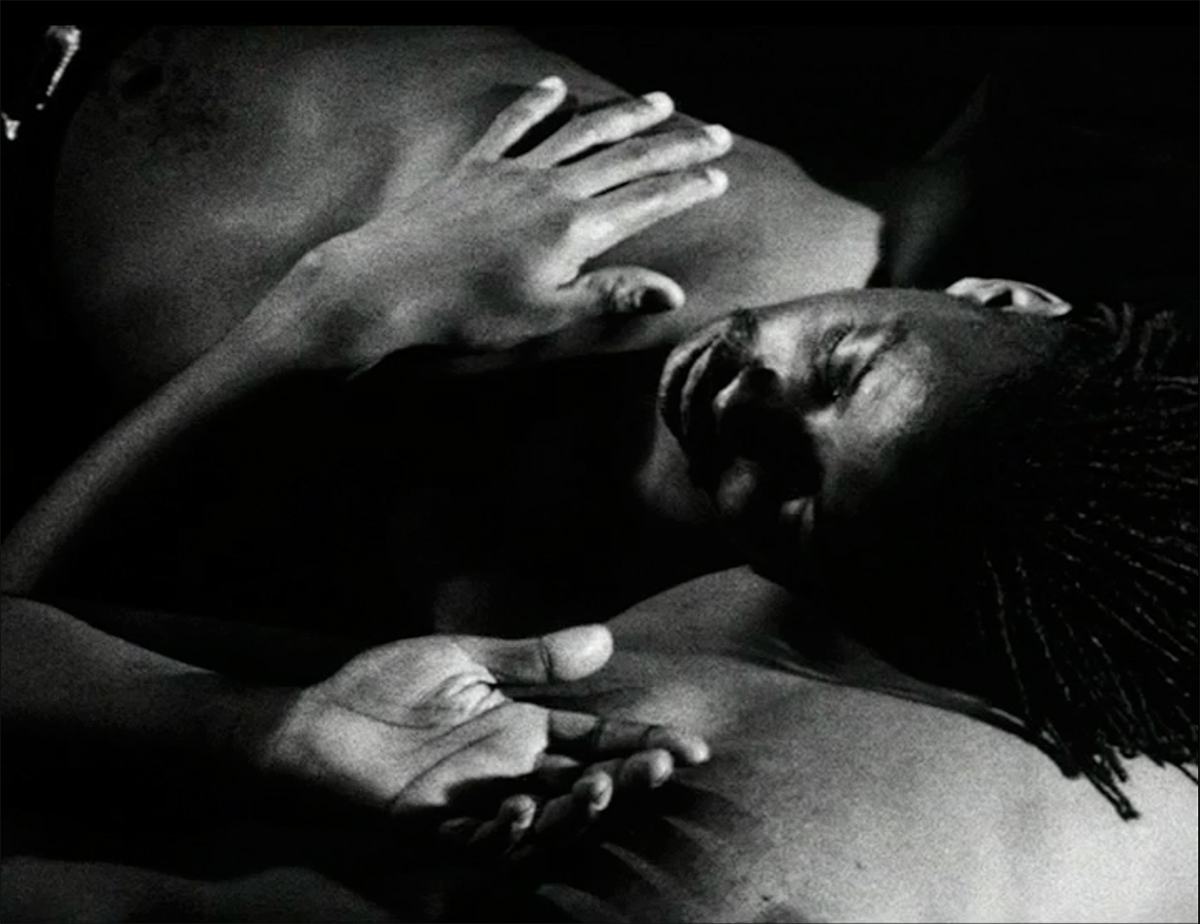
A cinematic exploration of London as a symbolic as well as a civic space, representing ideals of affluence and the hope of a new beginning, and contrasting it with the reality of the harsh welcome offered to many migrants. By 1989, the conservative government was three years into a programme of wealth creation and urban redevelopment unparalleled in 20th Century Britain. Black Audio Film Collective’s third work Twilight City can be seen as the first essay-film to map the new London through an excavation of Docklands, the City, Limehouse and the Isle of Dogs. In its movement between archival image, fictional script, studio interview, photographic tableau and travelling long shots, London is reimagined as a nighttime city of light and glass, bordered by a landscape of dreams, sequenced by electronic pulses.
"Mathison’s modus operandi is to exploit the synthesiser’s innate ability to be inhuman. The result is that sound offers no refuge from deterritorialisation. There is no ‘core of affect’ — whether gospel or reggae or blues or jazz — around which the film can secure an inviolable core of identity; on the contrary, the score marshals its affects and identifications from within electro-modernity, from inside the synthesiser’s inherent alienation- effect." (Kodwo Eshun)


