
In the presence of Marta Mateus.
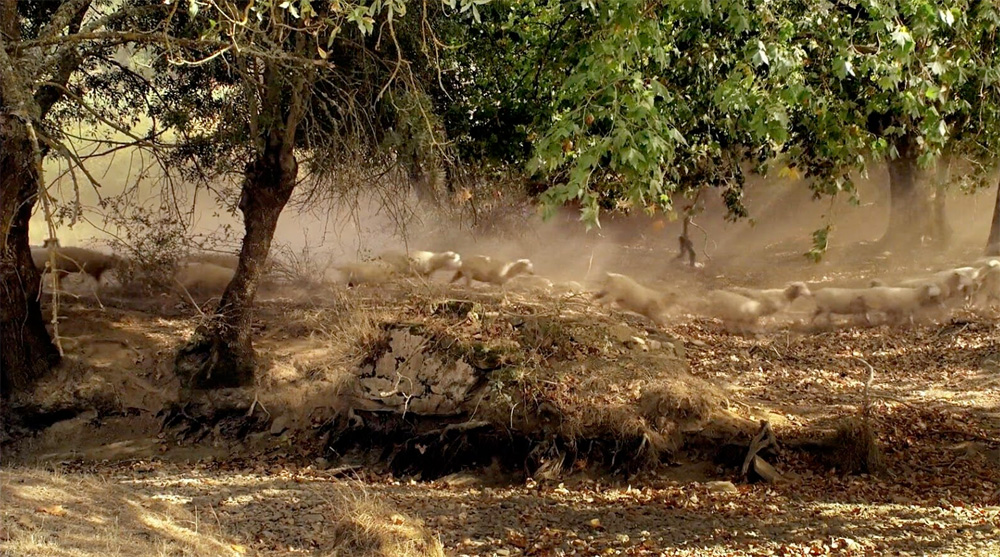
“It is said in Alentejo, when something is lost, those who are looking should start to walk back to the beginning. Farpões, Baldios, a fulgurous first film by Marta Mateus, undertakes such a walk. It is an account of dispossession, of wastelands that were once part of the commons, and of the people who have been living and working in these lands without ever owning them. It takes place in the south of today’s Portugal, but the struggle is old and you might be familiar with it: “They didn’t die out of love. It was a fight.”
It is a matter of transmission and resilience, (hi)stories told (hi)stories heard. The children are now free to wander the fields, and in their wanderings they play and meet their elders. A way of life is enunciated by the men in the dark of the barns, almost a litany. “Now we weed. Then the pruning. And we sow the carnations.” But the labor we see is performed by women: peeling vegetables, collecting firewood, conjuring exorcisms. For those who care to look, this landscape is charged with presences. (Sílvia das Fadas)
Portuguese with English subtitles

Les Magiciens de Wanzerbé werd geproduceerd in het kader van een wetenschappelijke missie naar Niger in 1948-1949 en werd door Jean Rouch beschouwd als zijn eerste etnografische film. Hij documenteerde er “de voornaamste rituelen van de Songhai tovenaars die afstammen van keizer Sonny Ali uit het dorp Wanzerbé in Niger. De markt in Wanzerbé, kinderspelletjes, Mossi de magiër, dans der tovenaars en een offer aan de bergdorpsgeest.” Deze film was de eerste film die aan de Westerse toeschouwer liet zien dat de krachten van de Sohantyé magiërs van Songhai niet zomaar het product waren van een collectieve illusie.
French with English subtitles


