
In the presence of Katja Mater, Viktoria Schmid, Esther Urlus

In Test Film (2017-2026), visual artist Katja Mater once again explores the boundaries of the film medium. The work consists of hand-drawn ‘interpretations’ of graphic 16mm test images, known as SMPTE tests, originally intended for calibrating film images with the aim of achieving an ‘optimal’ or ‘correct’ reproduction in print or projection. Mater’s drawn and subsequently filmed versions bring this objective of film as a representation of reality into sharp focus. Test Film emphasises the concept of film as an ephemeral construct of image and time.
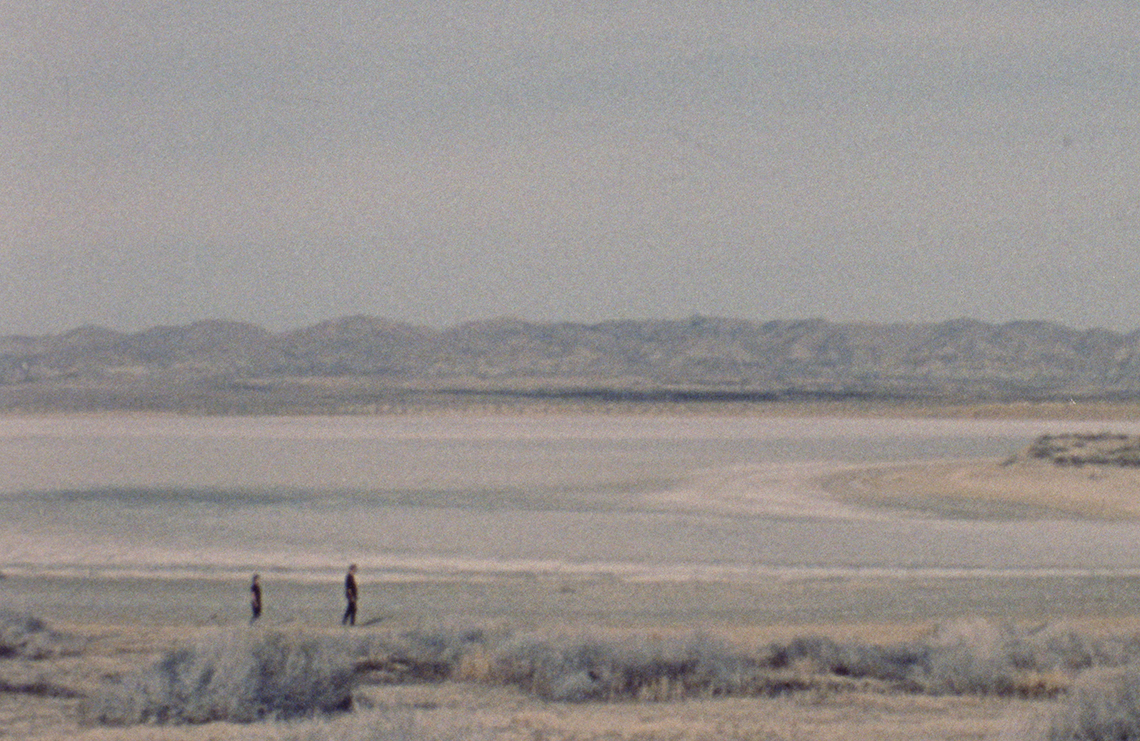
A standard length for a roll of 16mm film is 100 feet / 30.5 metres. Filmmaker Minjung Kim approaches film as a physical medium, as a body. In a series of works, she explores the relationship between standard film length and duration. (100ft) consists of 100 feet / 30.5 metres of film. The length of the film is represented by two figures in a landscape, each taking exactly 100 steps for the duration of the entire roll of film. The pace is determined by the fact that 1 foot of film contains 40 frames, which at 24 frames per second is approximately 1.66 seconds per foot. The two figures, a man and a woman, move step by step through the film frame, with the distance between the man and the woman increasing. (100ft) implicitly questions the dominant influence of gender in a measurement standard based on the adult male foot.
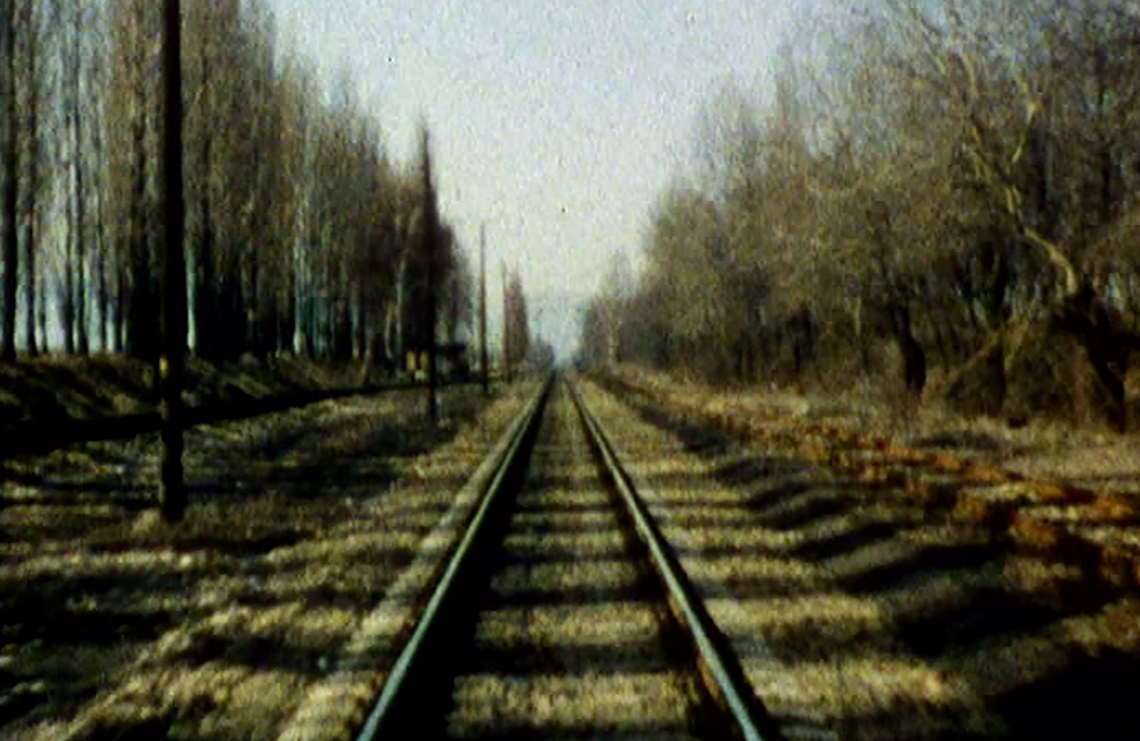
The filmography of Ivan Ladislav Galeta (1947-2014) excels in crystal-clear, analytically constructed film works. PiRâMidas (1972-1984) is a geometric journey through time by train to a certain point in space and back. The solid basis of the film is formed by an uninterrupted 5-minute recording on Fujicolor 16mm film stock made on 20 April 1984, 11:34 AM in Hungary. Using ‘cyclical’ editing, Galeta constructs a labyrinth of 7,261 film frames, with the end point of the first half of the film also being the climax: a projected ‘event’, marked with RGB-coloured film frames, which occurs exactly in the middle of this purely symmetrical film.

Rojo Žalia Blau is a landscape study that links three different locations in Spain, Lithuania and Austria in three layers of time using the technique of colour separation. For each shot of a forest or seascape, the colour negative passes through the lens of the 16mm camera three times, with a red filter, then a green filter and finally a blue filter. When projected, these images coincide again, but they are not entirely synchronised. Due to slight shifts in the recording time, the shapes and movements of the trees, shadows and waves subtly diverge. The world is bathed in a different light, resulting in a fluid perception of the concept of reality.

The surreal As Without So Within (2014-2016) is a meditation consisting of images of objects and their temporary relationships. With her background in creating spatial work, the artist crafted these objects and named them ‘prop sculptures’. They serve the film and function purely as instruments for creating autonomous images. Filming them in the studio took only an afternoon, but processing the images for the film took more than two years. Time that was needed for a ‘transformation’. In their static materiality, the sculptural objects now refer to the materiality of film, and in their form and presentation to aspects of cinema such as darkness, the frame, silence and the immobility of the viewer. This makes As Without So Within a slow-paced, immersive experience and a play with scale and time.

Esther Urlus embodies the ‘do-it-yourself’ approach to filmmaking. In her work, mainly on 16mm film, she draws inspiration from old or obsolete techniques from the history of film and photography. For Deletion, she drew inspiration from the autochrome process: a forgotten method of creating colour from black-and-white images whereby tiny grains of potato starch, coloured in red-orange, blue-violet and green, create the illusion of a colour image. This potato starch generated colour by overlaying a grainy pattern of the three primary colours (RGB) onto a black-and-white image. This technique is magnified in Deletion, making it seem as if you are looking at the image through a microscope: rustling grains in which only contours are visible, and forms that only partially recognisable, resembling the remnants of a human body.

Between 2008 and 2015, Alexandre Larose experimented in various ways with overlapping film recordings in the Brouillard series. From this series of layered time documents, #14, #15 and #16 are the most striking — all three recorded in a short period of time at the same location and with the same concept. The filmmaker uses a 35mm camera with 1000 feet / 300 metres of colour reversal film and walks in a single take from his parents’ house to the shore of nearby Lac Saint-Charles, close to Québec. Because the aperture is only slightly open, only tiny traces of light are created in the film emulsion from the brightest spots along the walk. By repeating this action and exposure multiple times, a slowly pulsating image is painted layer upon layer onto the film. The illuminated landscape is condensed by the camera into an enchanting documentation of time and place.


