
www.cinematek.be
O Acto da Primavera - Manoel de Oliveira (1962)
Fri 04.03.16 / 19:30
Visita ou Memórias e Confissões - Manoel de Oliveira (1982)
Sat 05.03.16 / 19:30
Sat 26.03.16 / 22:30 (Courtisane Festival, Sphinx cinema, Gent)
Aniki Bóbó - Manoel de Oliveira (1942)
Thu 10.03.16 / 21:30
O Pintor e a Cidade - Manoel de Oliveira (1956)
Cinéma, de notre temps: Oliveira - Paulo Rocha (1988)
Sat 12.03.16 / 17:30
Fri 13.05.16 / 22:00
Os Verdes Anos - Paulo Rocha (1963)
Sun 13.03.16 / 19:30
Sun 29.05.16 / 17:30
Mudar de Vida - Paulo Rocha (1966)
Sat 19.03.16 / 17:30
Trás-os-Montes - António Reis & Margarida Cordeiro (1976)
Sun 20.03.16 / 19:30
Sat 21.05.16 / 17:30
Francisca - Manoel de Oliveira (1981)
Mon 04.04.16 / 20:30
A Ilha de Moraes - Paulo Rocha (1984)
Wed 06.04.16 / 20:30
Cinéma, de notre temps: Shohei Imamura - Le libre penseur - Paulo Rocha (1995)
Thu 07.04.16 / 19:00
Sun 17.04.16 / 21:00
Mon 25.04.16 / 19:00
A Pousada das Chagas - Paulo Rocha (1971)
A Ilha de Moraes - Paulo Rocha (1984)
Fri 08.04.16 / 19:30
Ana - António Reis & Margarida Cordeiro (1982)
Tue 12.04.16 / 20:30
Sat 28.05.16 / 21:45
O Desejado ou As Montanhas da Lua - Paulo Rocha (1987)
Fri 15.04.16 / 19:30
Jaime - António Reis & Margarida Cordeiro (1974)
Rosa de Areia - Margarida Cordeiro & António Reis (1989)
Sat 16.04.16 / 21:30
Vale Abraão - Manoel de Oliveira (1993)
Thu 21.04.16 / 19:30
Viagem ao Princípio do Mundo - Manoel de Oliveira (1997)
Sat 23.04.16 / 19:45
Douro, Faina Fluvial - Manoel de Oliveira (1931-1934)
O Rio do Ouro - Paulo Rocha (1997)
Sat 30.04.16 / 21:30
Thu 26.05.16 / 17:30
Inquietude - Manoel de Oliveira (1997)
Sun 01.05.16 / 19:30
Sun 22.05.16 / 17:30
A Raiz do Coração - Paulo Rocha (2000)
Tue 03.05.16 / 20:30
As Sereias - Paulo Rocha (2001)
Porto da Minha Infancia - Manoel de Oliveira (2001)
Thu 05.05.16 / 21:45
Vanitas - Paulo Rocha (2004)
Thu 12.05.16 / 19:30
O Estranho Caso de Angélica - Manoel de Oliveira (2010)
Sun 15.05.16 / 17:30
Se Eu Fosse Ladrão, Roubava - Paulo Rocha (2013)
Tue 17.05.16 / 21:00

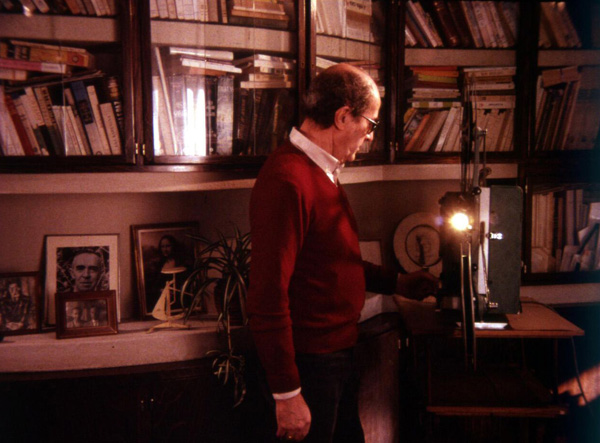
“The late, great Manoel de Oliveira stipulated that this film – made in 1982 – be screened only after his death. One of the Portuguese master’s most exquisite and moving films, and certainly his most personal, it assumes the rare form of an auto-elegy. The camera finds Oliveira, who died at 106 this past April, in the Porto house where he had lived for four decades and that he is preparing to leave due to mounting debts. He addresses the audience directly, setting the film’s convivial tone, and discusses a wide range of topics (family history, cinema, architecture), shares home movies, and reenacts his run-in with the military dictatorship. Oliveira made the film at age 73, presumably expecting he was near the end of his life. He would in fact live another 33 years and make another 25 or so films, some of them among his greatest.” (New York Film Festival)
Associated with “Acto da primavera” (4 March - 17 May, Cinematek, Brussels), a unique selection of films by Manoel de Oliveira, Paulo Rocha, António Reis and Margarida Cordeiro. A collaboration between Cinematek, Cinemateca Portuguesa, the Embassy of Portugal in Belgium, Instituto Camões, Sabzian and Courtisane.


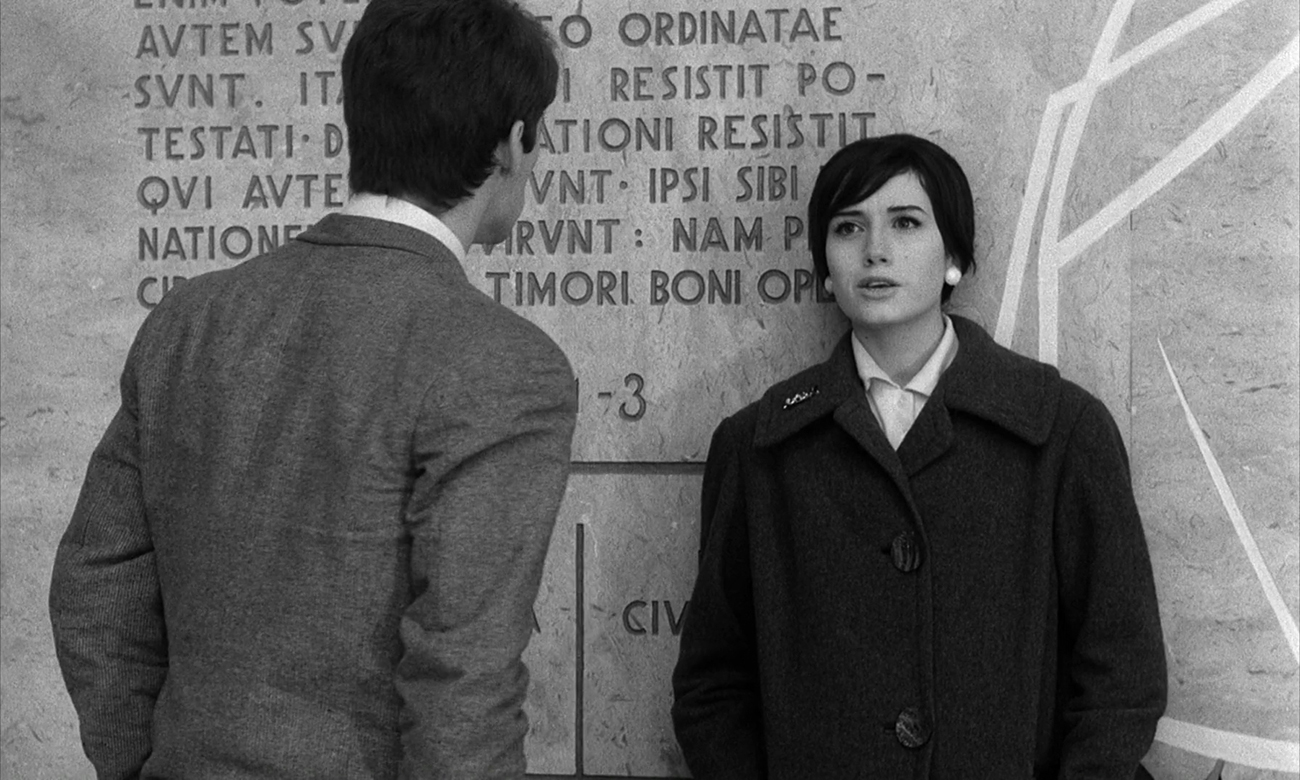
Paulo Rocha’s debut feature The Green Years, gloriously shot in black and white, is an extraordinary and haunting coming-of-age tale. Nineteen-year-old Julio heads to Lisbon from the provinces and gets a job as a shoemaker for his uncle Raul. But when he meets Ilda, a confident young housemaid who becomes a regular shop visitor, the two begin a tentative romance until the realities of the outside world come crashing through.
Widely considered the founding text of the New Portuguese Cinema, Rocha’s film reflected a new attitude in the wake of post-Salazar modernization of urban life in the 1960s. Rocha subverts melodramatic conventions by avoiding easy psychology or clearly defined goals, and favors mise-en-scène over narrative, reflecting a country at odds with its national character. Through its modernity, content and direction, this film opened new horizons for Portuguese cinema.
Portuguese spoken, English subtitles
Digital restoration by and courtesy of Cinemateca Portuguesa
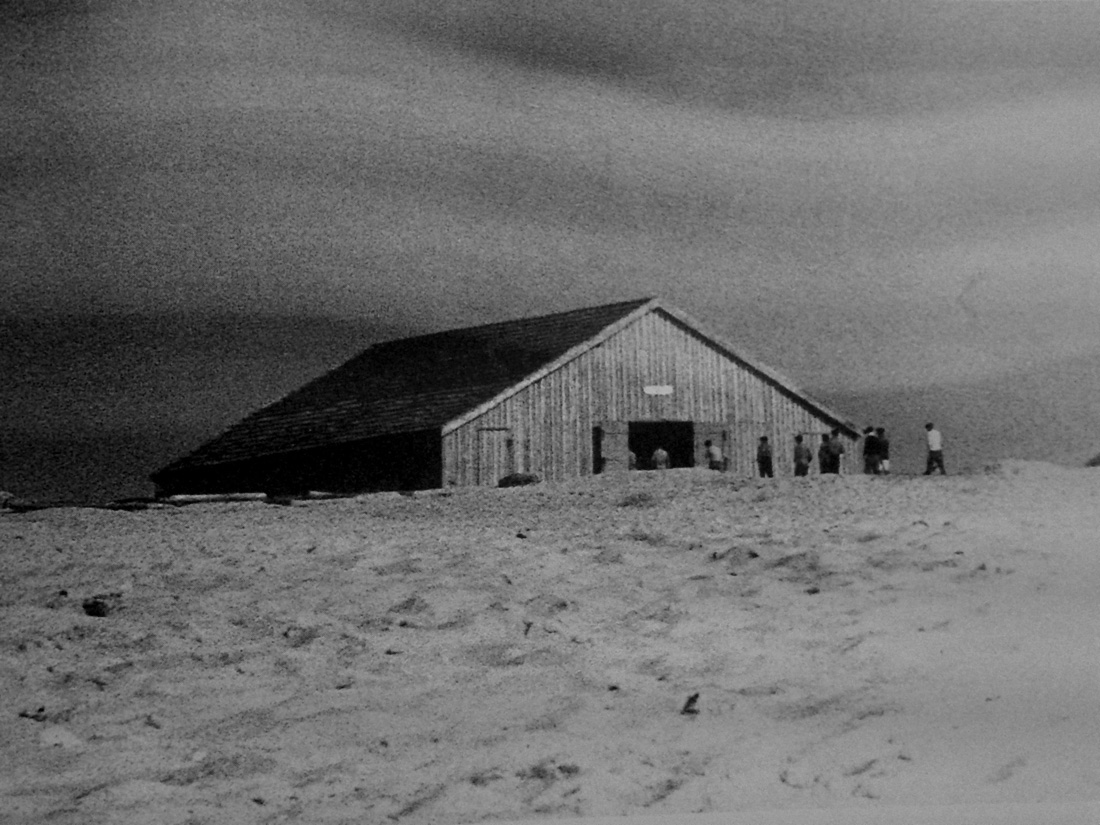
The second and arguably most important film by Paulo Rocha, one of the central figures of the Novo Cinema, Mudar de Vida is a direct response to Oliveira’s Rite of Spring (and, indirectly, to varda’s La Pointe Courte) and an important precursor to the radical documentary shaped fiction of António Reis and Margarida Cordeiro and, much later, the work of Pedro Costa. Captivated by the remote Portuguese fishing village of Furadouro, Rocha chose not to make a traditional documentary but rather to engage the specificities of the people and place through fiction, crafting a melancholy story about a soldier’s return to a changing world. Inspired by his experience working with Oliveira on Rite of Spring, Rocha “cast” the local villagers as themselves, interspersed with experienced actors led by the great Isabel Ruth, who would go onto become an Oliveira regular and an iconic presence in Costa’s Ossos (1997). The poetry of the local vernacular is captured in the textured dialogue written by Reis, who met Rocha through Oliveira. Despite the steadily building critical acclaim that followed the release of Mudar de Vida – and despite its controversial depiction of a disillusioned Angola War veteran – Rocha effectively ceased filmmaking until the 1980s. (Harvard Film Archive)
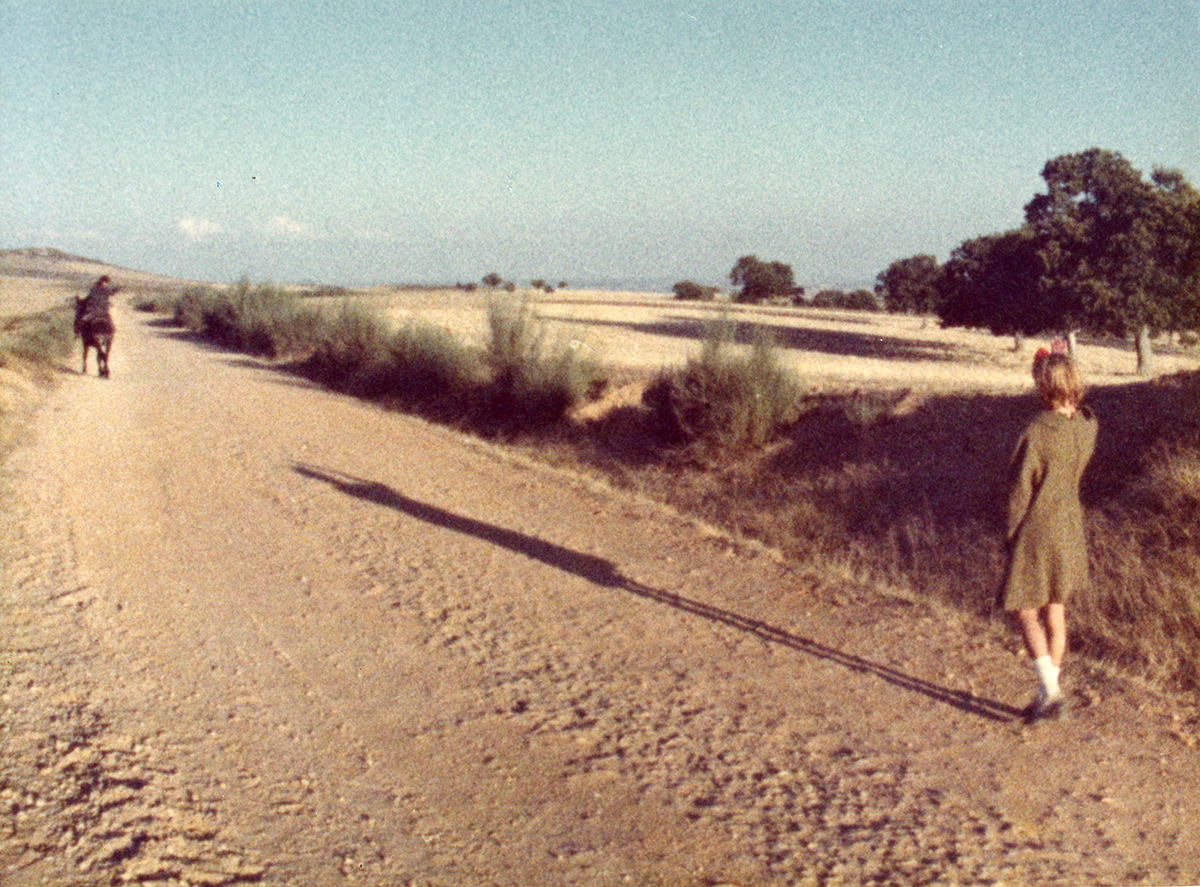
For Jean Rouch, “this film reveals a new cinematographic language.” Reis and Cordeiro’s indisputable masterpiece exploded the meaning and possibilities of ethnographic cinema with its lyrical exploration of the still resonant myths and legends embodied in the people and landscapes of Portugal’s remote Trás-Os-Montes region. Evoking a kind of geologically Bergsonian time, with past and present layered upon one another, Trás-os-Montes interweaves evocative recreations of the ancient worlds and encounters with atavistic peasantry, following the pilgrim’s path traced by Reis and Cordeiro as they led their skeletal crew from village to village in search of the poetic essence of the Portuguese language and imagination. Painstakingly researched and shot over the course of one year, Reis and Cordeiro became intimate with every person included in their ambitious film, carefully selecting the different voices, faces, and gestures that would together provide an extraordinary composite, associative, and mythological response to the question of how to define a ‘national cinema’. (Harvard Film Archive)
“António Reis was a kind of visionary scientist. He looked at the world, at the stones, at nature, with the eyes of a sage and a poet. He found in them the magical side and the geological side... António and Margarida’s film was a masterpiece that brought them European fame. When the film premiered in Paris, Le Monde published a terrorist order signed by Joris Ivens and Jean Rouch, the two supreme masters of documentary cinema: ‘Allez voir, toutes affaires cessantes, Trás-os-Montes!’” (Paulo Rocha)
Portuguese spoken, English subtitles
New digitized version courtesy of Cinemateca Portuguesa

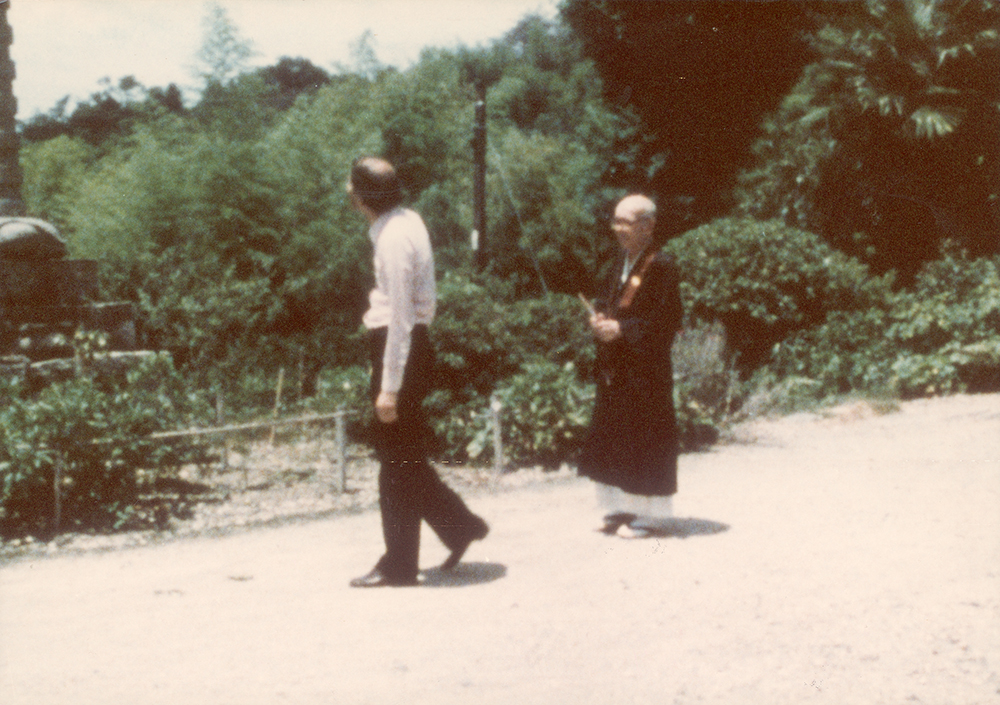
Made as a ‘twin’ of A Ilha Dos Amores, A Ilha de Moraes is a poetic documentary on the enigmatic life of Wenceslau de Moraes, the great Portuguese writer who, like Paulo Rocha himself, had a profound fascination for Asian cultures and lived in Japan from 1912 until his death in 1929. Rocha, who served as a cultural attaché for his country in Japan from 1975 to 1983, visited places where Moraes was still remembered, interviewed the writer’s descendants, consulted archives and rummaged through diaries, photographs and manuscripts in order to establish an intimate dialogue with his life and work, whilst expanding to the history of Portugal, Europe and the Far East. Above all he set out on a new journey, from Lisbon to Macao and Kobe until he reached Tokushima, where Moraes lived through the final period of his life and where Rocha tracks down, between the city and the cemetery, the living presence of places and the respectful memories left behind by this remarkable writer. This film was developed in close collaboration with filmmaker and writer Haneda Sumiko, who was a founding member of Iwanami Productions, together with other filmmakers including, notably, Shinsuke Ogawa and Noriaki Tsuchimoto.
Restored in its original version by Cinemateca Portuguesa – Museu do Cinema.


A film by poets, but also by geologists, anthropologists, sociologists, by all the possible ‘logists.’ Reis and Cordeiro are Portuguese, but not from Lisbon (it is a much too provincial capital city), not even from Porto. They situate their films in this north of Portugal where the tourists never come (they invade the Algarve in hordes, the fools). Beautiful and abandoned landscapes, which have to be perceived as sumptuous ruins; a countryside that is filmed as if it were a city. In Ana, the trees, the roads, the stones of the houses almost have names. Everything is a junction; nothing is anonymous. The film is a consoling buzzing: the sound of the wind causes the images to swell and flow back like a sea. There is emptiness in the midst of these sensations, the way there is an emptiness in this part of Portugal. The films by Reis and Cordeiro record a disorienting situation of emigration, caused by the exodus: the men have left, the children are now left to their games and the elderly are left to guard the places. There is no supervision from the parents here, only the guardianship of grandparents, in a game of glances, fleeting and tender, surprised and serious. (Serge Daney)

“A film about a madman. Filmed in a “hospital for crazy people” in Lisbon, which at that time (the mid-Seventies) was a place that was half prison, half wild, that we didn’t talk about. Jaime, the character who gave the film its title, made quite beautiful and spectacular drawings. The unusual thing is that they were made with red, green and blue biros. This technique with the primary colours added to the aesthetic interest. From this starting point, António Reis directed a surprising and quite surrealist film that stands apart from his usual work. A beautiful artist’s portrait conceived in a very modern manner, like a collage, in the same style subsequently employed by André S. Labarthe.” (Pedro Costa)


